Local Tour Operator – African Trek & Travel Tanzania Green...
Read More
African Trek & Travel | June to October Tanzania Wildlife Safaris
Tanzania Dry Season Safari Packages with Wildlife Viewing
Experience the extraordinary wildlife of East Africa with our Tanzania Dry Season Safari Packages with Wildlife Viewing, specially designed for travelers who want exceptional safari experiences across Serengeti National Park, Ngorongoro Crater, Tarangire National Park, Lake Manyara and other remarkable destinations. The main dry season generally extends from June through October and is widely regarded as one of the best periods for African wildlife safaris. During these months, rainfall is often limited, vegetation gradually becomes less dense and animals may gather around permanent rivers, wetlands and other reliable water sources. The result is an attractive combination of open landscapes, rewarding game drives and opportunities to observe lions, elephants, giraffes, zebras, buffaloes, wildebeest and other African animals in their natural habitats.
The dry season is particularly famous for the annual Great Wildebeest Migration in Serengeti National Park. During June, migrating herds may be moving through the Western Corridor and toward northern grazing areas. From July through September, Northern Serengeti and the wider Mara River ecosystem become important destinations for travelers interested in observing migrating wildebeest and zebras. River crossings may occur during this period when animals move naturally between grazing areas, although no safari operator can predict or guarantee a crossing on a particular day. October can still offer northern migration opportunities, but some herds may begin moving toward central or eastern Serengeti as seasonal conditions change. Our dry season safari itineraries are planned according to the month of travel, rather than assuming the migration remains in one location throughout the entire season.
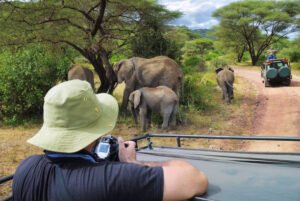
Tarangire National Park is another highlight of Tanzania's dry season. The park is renowned for its magnificent elephant populations, ancient baobab trees and beautiful savannah landscapes. As surrounding areas become drier, elephants and other mammals may gather around the Tarangire River, wetlands and suitable permanent water sources. This makes July, August, September and October particularly attractive for elephant viewing, although animal distribution varies naturally. Ngorongoro Crater is equally impressive, offering opportunities to observe lions, buffaloes, elephants, zebras, wildebeest, hippos, birds and the endangered black rhino, which can be difficult to find. Central Serengeti remains a strong choice for resident lions and leopards throughout the year, allowing visitors to enjoy rewarding wildlife encounters even when the migrating herds are elsewhere.
Our Tanzania dry season safari packages range from short two day wildlife trips to extended twelve day adventures across the famous national parks. Budget travelers may prefer suitable group joining camping safaris, while couples, families and photographers often appreciate private 4x4 adventures with a dedicated professional local guide. Comfortable midrange lodges, furnished tented camps and luxury safari accommodation provide different levels of service and comfort. The featured eight day dry season itinerary combines Tarangire, Ngorongoro Crater, Central Serengeti and Northern Serengeti, with three nights in the north to allow extended migration wildlife observation. This featured route is especially appropriate for July, August and September. For June or later October departures, we recommend adjusting the Serengeti accommodation locations according to seasonal herd movement.
The dry season also provides excellent opportunities for wildlife photography, family holidays, honeymoon safaris and extended adventures to Tanzania's southern national parks. Ruaha National Park and Nyerere National Park can offer rewarding dry season wildlife viewing, with beautiful river habitats, elephants, buffaloes, predators and a different atmosphere from the busy northern circuit. Travelers can also combine their safari with a Zanzibar beach holiday or Mount Kilimanjaro trekking expedition. Dry season game drives often provide favorable road conditions compared with the wetter months, although dust, occasional rain and cold morning temperatures remain possible. Popular camps and lodges can become busy during the peak travel season, so early accommodation reservations are recommended.
African Trek & Travel offers personalized Tanzania dry season safaris led by experienced local wildlife guides. We arrange private tours, suitable group joining departures, family adventures, luxury lodge holidays, Great Migration photography safaris and customized wildlife itineraries for solo travelers, couples and larger groups. Every package is designed around the travel dates, number of guests, preferred national parks, accommodation standard and available budget. Our team provides detailed safari itineraries, confirmed accommodation information, appropriate transport arrangements and clear package quotations. Contact us to discover the best Tanzania dry season safari package for your wildlife interests and preferred travel dates.
June to October Safaris
Tanzania Dry Season
Best Wildlife Viewing
Serengeti National Park
Great Wildebeest Migration
Mara River Wildlife
Northern Serengeti
Central Serengeti
Tarangire Elephants
Ngorongoro Crater
Lake Manyara
Ruaha National Park
Nyerere National Park
Big Five Safaris
Wildlife Photography
Private Tanzania Safaris
Group Joining Camping
Midrange Safari Lodges
Luxury Wildlife Safaris
Family Safari Holidays
Zanzibar Extensions
8 Day Featured Itinerary
Copy the complete HTML, CSS and JavaScript source using the button above.
Dry season weather, animal movements, river crossings, individual sightings, accommodation and package prices vary by date. Every wildlife safari requires a confirmed itinerary and quotation.
June–October
Main dry season safari period
Great Migration
Seasonal Serengeti wildlife
8 Day Safari
Featured wildlife itinerary
Private & Group
Custom travel arrangements
Best Tanzania Dry Season Safari Packages for Exceptional Wildlife Viewing
Tanzania is one of Africa's most celebrated safari destinations, known for its extraordinary wildlife diversity, spectacular national parks and breathtaking landscapes. Although wildlife viewing is possible during different seasons, the main dry season from approximately June through October is especially popular with travelers who want to observe large mammals in their natural environment. As vegetation becomes less dense and some temporary water sources disappear, many animals increasingly depend on suitable permanent rivers, lakes and wetlands. This can make wildlife easier to locate in certain regions and create rewarding opportunities for observing elephants, buffaloes, giraffes, lions, zebras and other species.
The Serengeti ecosystem is one of the major highlights of Tanzania's dry season. Its expansive grasslands, rocky kopjes and riverine habitats support a remarkable variety of resident animals. The famous Great Wildebeest Migration also moves through important areas during these months. June is traditionally associated with the movement toward the western and northern parts of Serengeti. July through September often bring migration activity to Northern Serengeti and the wider Mara River ecosystem. During October, some herds may remain in the north while others begin moving toward central or eastern grazing areas. The exact location of the migration varies each year with rainfall and the availability of fresh grass. No particular river crossing or herd concentration can be guaranteed.
Tarangire National Park provides another exceptional dry season experience. As the surrounding landscape becomes drier, elephants and other animals may gather around the Tarangire River and suitable permanent water sources. The park is famous for its ancient baobab trees, beautiful savannah and varied animal populations. Visitors may encounter large elephant groups, zebras, buffaloes, wildebeest, giraffes and several antelope species. Lions and leopards also inhabit suitable habitats. August, September and October can be particularly attractive for elephant viewing, though daily sightings remain dependent on natural wildlife movements.
Ngorongoro Crater is an important addition to most northern Tanzania safari itineraries because of its unique volcanic environment and diverse resident wildlife. The crater floor contains grasslands, wetlands and woodland habitats supporting lions, buffaloes, elephants, hippos, zebras, wildebeest and numerous bird species. Endangered black rhinos also inhabit the crater, although sightings may be difficult. Lake Manyara offers a different environment with forest, woodland and lakeside habitats, while Ruaha and Nyerere provide rewarding alternatives for travelers interested in southern Tanzania wildlife.
Dry season safari conditions can be very attractive for photography. Open landscapes, golden grasses, clear skies and wildlife activity around suitable water sources create opportunities to photograph animals and beautiful African scenery. Early morning game drives may be cool, especially around Ngorongoro and higher elevations, while daytime temperatures vary by park. Dust can be present on busy tracks and should be considered when protecting camera equipment. The dry season does not guarantee completely rain free weather, but widespread heavy rain is generally less common than during the main rainy periods.
Travelers can choose from short group joining adventures, private midrange safari packages, family friendly wildlife holidays and luxury Great Migration experiences. A short two or three day safari can include Tarangire and Ngorongoro, while an extended seven or eight day safari provides more time in Serengeti. Dedicated Mara River migration trips should include suitable Northern Serengeti accommodation, particularly during July, August and September. The best choice depends on your available travel time and whether you prioritize elephants, big cats, river crossing opportunities, photography or general wildlife viewing.
African Trek & Travel designs Tanzania dry season safari itineraries with realistic driving schedules, appropriate accommodation and experienced local guides. Our personalized packages can include airport transfers, selected lodge nights, game drives, park fees and domestic flights when stated in the confirmed quotation. Every safari is planned according to the actual month of travel, number of participants and available services, helping guests make informed decisions before reserving their African holiday.
Dry Season Wildlife Viewing
The main dry season is generally June through October. Wildlife can become easier to observe around dependable water sources, but animals still move naturally. The location of the Great Migration, any Mara River crossing and individual Big Five sightings cannot be promised.
Why Tanzania Dry Season Safaris Are Popular for Wildlife Viewing
Wildlife Observation
Animals Near Water Sources
Many mammals may become easier to observe around suitable permanent rivers and wetlands.
Famous Natural Spectacle
Great Wildebeest Migration
Explore suitable western and northern Serengeti regions as migration herds move through the ecosystem.
Big Cat Destinations
Serengeti Lions and Leopards
Discover resident predators in Central Serengeti and other appropriate wildlife habitats.
Elephant Safari
Tarangire National Park
Observe elephants and beautiful baobab landscapes during the dry season.
Iconic Wildlife Destination
Ngorongoro Crater
Explore the remarkable volcanic caldera and its diverse resident wildlife.
Savannah Photography
Golden Grassland Landscapes
Capture scenic dry season plains, wildlife and dramatic African landscapes.
Wildlife Diversity
Big Five Safari Opportunities
Explore habitats of lions, elephants, buffaloes, leopards and rhinos without guaranteed sightings.
Practical Game Drives
Generally Favorable Roads
Many established safari roads experience fewer rain related disruptions during the dry season.
Private Wildlife Travel
Flexible 4x4 Safaris
Choose a dedicated guide and vehicle with an itinerary built around your interests.
Safari and Beach Holiday
Zanzibar Extensions
Combine wildlife viewing with a relaxing holiday on Tanzania's Indian Ocean coast.
Best Months for Tanzania Wildlife Viewing from June to October
Each dry season month offers different wildlife opportunities. The best month depends on whether you want elephants, resident big cats, Great Migration movement, possible Mara River crossings or a classic northern circuit safari.
| Month | Typical Wildlife Conditions | Important Safari Regions | Best Wildlife Interests |
|---|---|---|---|
| June | Dry season developing after the long rains. | Central and Western Serengeti, Ngorongoro and Tarangire. | Migration moving west and north, general wildlife and changing landscapes. |
| July | Generally dry with cool mornings and increasingly open habitats. | Western and Northern Serengeti, Tarangire and Ngorongoro. | Northward migration, elephants and possible early Mara River activity. |
| August | Established dry season conditions in many northern parks. | Northern Serengeti, Kogatende, Tarangire and Ngorongoro. | Migration herds, possible river crossings and elephants. |
| September | Dry landscapes and rewarding wildlife around suitable water sources. | Northern Serengeti, Tarangire, Central Serengeti and Ngorongoro. | Possible Mara River crossings, elephants and predator viewing. |
| October | Late dry season, with possible early short rains. | Tarangire, Central and Northern Serengeti, Ngorongoro. | Elephants, resident wildlife and possible return migration movement. |
These are broad seasonal patterns rather than exact monthly guarantees. Some years have earlier or later rain, changing the timing of animal movements.
Why Wildlife Viewing Can Be Better During Tanzania's Dry Season
The dry season changes the distribution of animals across many Tanzanian ecosystems.
As temporary water sources decline, suitable permanent rivers, lakes and wetlands can become increasingly important.
Elephants, buffaloes, zebras, giraffes and other species may move toward dependable water and grazing habitats.
In some places, shorter and drier vegetation provides clearer views of wildlife.
Animals may be visible in more open landscapes compared with periods of dense rainy season growth.
Predators such as lions, leopards, cheetahs and hyenas continue using suitable habitats throughout the year.
Some predator encounters may occur near places used by large concentrations of prey, although hunting events are unpredictable.
The dry season also provides attractive opportunities for landscape photography, especially when golden plains contrast with baobab trees and savannah wildlife.
However, the same dry conditions may mean more dust on certain roads and higher visitor demand at famous wildlife sites.
A professional local guide can select appropriate permitted routes based on current wildlife observations rather than relying only on seasonal expectations.
Serengeti Great Wildebeest Migration from June to October
The Great Wildebeest Migration is one of the most famous wildlife movements on the African continent.
Large numbers of wildebeest and zebras move through the Serengeti–Mara ecosystem in response to rainfall, grass growth and water availability.
During June, herds commonly move through parts of Central and Western Serengeti as the northward migration progresses.
The Western Corridor and Grumeti ecosystem can become relevant during this stage.
During July, some herds may reach Northern Serengeti while others remain farther west or central.
August and September are traditionally important months for Northern Serengeti and Mara River migration activity.
Some wildebeest herds may cross between Tanzania and Kenya in either direction.
Crossings are natural, unpredictable events that cannot be arranged or guaranteed.
By October, some groups may still be in northern grazing areas while others begin returning toward Central or Eastern Serengeti.
The exact migration location is influenced by seasonal conditions and may differ significantly between years.
Great Migration Planning Advice
For a safari focused on possible Mara River crossings, July through September is generally the most appropriate planning period. August and September are particularly popular, although crossings may occur earlier or later. Stay several nights in suitable Northern Serengeti accommodation and remember that a crossing is never guaranteed.
Tanzania Safari Packages in June for Early Dry Season Wildlife Viewing
June is commonly associated with the beginning of the main dry season in northern Tanzania.
The long rains generally become less frequent, although some areas may still retain fresh green vegetation.
Wildlife viewing can be rewarding across Serengeti, Ngorongoro and Tarangire.
The Great Migration may be moving through Central and Western Serengeti toward the northern grazing areas.
The Western Corridor and Grumeti ecosystem can be important depending on the progress of the herds.
River activity may occur naturally, but no specific crossing can be guaranteed.
June can provide attractive scenery, including a mixture of green and golden grasslands.
Early morning temperatures can be cool, especially around Ngorongoro.
A June itinerary should not automatically copy a peak August Northern Serengeti route, because the migration may not yet have reached the north.
African Trek & Travel can recommend a suitable Serengeti region according to the exact June travel dates.
Tanzania Safari Packages in July for Great Migration and Big Five Wildlife
July is one of the most popular months for a Tanzania dry season safari.
Many northern wildlife areas experience relatively dry conditions and cool mornings.
The Great Migration may be progressing toward Northern Serengeti, although some herds can remain in western or central regions.
Possible Mara River activity may begin or continue depending on herd movement.
Tarangire can become increasingly attractive for elephant viewing as dry conditions develop.
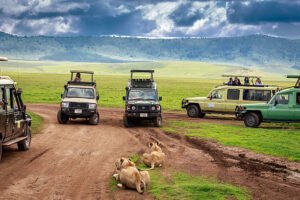
Central Serengeti remains rewarding for resident lions, leopards, giraffes and other species.
Ngorongoro Crater provides an excellent complement to a Serengeti safari.
July is also a busy travel period, so suitable accommodation should be reserved in advance.
Travelers interested mainly in the migration should confirm whether their booked camp is located close to the relevant wildlife region.
August Tanzania Safari Packages for Mara River Crossings and Elephants
August is traditionally a peak month for Northern Serengeti migration safaris.
Large wildebeest and zebra herds may occupy northern grazing areas within Tanzania and Kenya's Maasai Mara ecosystem.
Some animals may cross the Mara River as their natural movements continue.
A river crossing may happen suddenly, after a long delay or at a location inaccessible to visitors.
No guide can guarantee a crossing, even when wildebeest gather near the river.
Northern Serengeti accommodation around Kogatende and Lamai may provide suitable access to migration habitats.
Tarangire can also offer excellent elephant viewing in August.
A complete safari can combine Northern Serengeti, Central Serengeti, Ngorongoro and Tarangire.
August is a popular booking month, particularly for premium migration camps and family accommodation.
Advance reservations are recommended for travelers with fixed dates.
September Tanzania Safari Packages for Wildlife Migration and Predator Viewing
September is another excellent month for dry season wildlife viewing in northern Tanzania.
Northern Serengeti remains an important region for migration safaris, with wildebeest and zebras potentially occupying areas around the Mara River.
Crossings may occur in either direction between grazing areas, depending on seasonal conditions.
Some herds can remain north while others begin moving through different parts of the ecosystem.
Tarangire is especially attractive for elephant viewing as permanent water sources become increasingly important.
Central Serengeti supports resident lions, leopards and various plains animals throughout the year.
September can provide beautiful dry savannah scenery for wildlife photography.
Guests interested in river activity should consider three or more nights in suitable Northern Serengeti accommodation.
October Tanzania Safari Packages for Late Dry Season Wildlife Viewing
October is generally associated with the later part of Tanzania's main dry season.
Some short rains may begin during the month, depending on the year and region.
Tarangire can remain an attractive destination for elephants and other animals near suitable permanent water sources.
Central Serengeti provides excellent resident wildlife viewing around Seronera.
Some migrating wildebeest may remain in Northern Serengeti, while other groups begin moving toward central or eastern areas.
The exact location of the Great Migration varies and should not be predicted using a fixed date.
Ngorongoro Crater remains a rewarding destination for diverse wildlife.
October travelers should select accommodation according to their actual travel dates and wildlife interests.
Late October itineraries may benefit from greater Central Serengeti time rather than relying entirely on distant northern migration camps.
Serengeti National Park Safari Packages During the Dry Season
Serengeti National Park is one of the most famous wildlife destinations in the world.
The park's expansive grasslands, rocky kopjes and riverine environments support diverse resident animals.
Visitors may encounter lions, leopards, elephants, giraffes, buffaloes, zebras, gazelles and many other species.
The Seronera region of Central Serengeti is particularly important for year round resident wildlife viewing.
During the dry season, the Great Wildebeest Migration travels through different parts of the park according to environmental conditions.
Western Serengeti can be relevant during June and parts of July.
Northern Serengeti becomes increasingly important during the main Mara River migration period.
Some herds may remain in northern habitats into October before returning toward other grazing regions.
A suitable Serengeti itinerary should include practical accommodation locations and sufficient wildlife observation time.
Guests prioritizing migration crossings should not assume a Central Serengeti lodge is close to Mara River.
Tarangire National Park Dry Season Safari for Elephants and Baobab Trees
Tarangire National Park is one of Tanzania's most attractive dry season wildlife destinations.
The park is particularly famous for its African elephants and enormous baobab trees.
As seasonal conditions become drier, suitable permanent water sources can attract elephants and other mammals from surrounding areas.
The Tarangire River plays an important ecological role during dry periods.
Visitors may encounter elephants, giraffes, buffaloes, zebras, wildebeest, antelopes and different bird species.
Lions and leopards also inhabit appropriate woodland and savannah habitats.
Wildlife distribution varies daily, but August, September and October can be particularly rewarding for elephant observation.
Baobab trees provide spectacular landscape photography opportunities throughout the year.
A Tarangire safari can be enjoyed as a full day trip or included in an extended northern circuit itinerary.
Travelers with additional time may request two nights in or near the park for more wildlife observation.
Ngorongoro Crater Wildlife Viewing During Tanzania's Dry Season
Ngorongoro Crater is one of Tanzania's most remarkable natural wildlife destinations.
The volcanic caldera contains grassland, wetland and woodland habitats supporting many species.
Visitors may encounter lions, elephants, buffaloes, zebras, wildebeest, hippos, gazelles and various birds.
Endangered black rhinos also inhabit the crater, although sightings cannot be guaranteed.
Dry season conditions can provide attractive wildlife viewing and clearer views across some parts of the landscape.
However, early morning temperatures around the crater rim can be very cool, particularly in June, July and August.
Visitors should bring a warm fleece or jacket for highland conditions.
Game drives must follow the permitted crater routes and applicable conservation regulations.
Ngorongoro pairs naturally with Tarangire and Serengeti in longer private or group safari packages.
Lake Manyara National Park Dry Season Wildlife and Bird Watching Safari
Lake Manyara National Park provides a different environment from the expansive Serengeti plains.
The park includes groundwater forest, woodland, open habitats and lakeside landscapes.
Visitors may encounter monkeys, baboons, elephants, giraffes, buffaloes, hippos and various bird species.
Lake Manyara is associated with tree climbing lions, although sightings are uncommon.
Dry season conditions can influence vegetation, water levels and animal movements.
Birdlife varies according to seasonal conditions and suitable available habitats.
A Lake Manyara visit can be included in a short northern circuit tour or added to a private safari.
Guests whose main interest is the Great Migration may prefer extra Serengeti accommodation nights instead.
Ruaha National Park Dry Season Safari for Elephants, Predators and Remote Wildlife
Ruaha National Park is an important wildlife destination in southern Tanzania.
The park is known for beautiful landscapes, elephants, lions, buffaloes and other wildlife.
Its river systems and varied habitats can become especially important during the dry season.
As water becomes less widely available, animals may concentrate around suitable river and wetland areas.
The dry season is generally a rewarding period for observing larger mammals in Ruaha.
The park provides a different atmosphere from the famous northern safari circuit.
Travel arrangements may involve suitable domestic flights or longer road journeys depending on the starting location.
A Ruaha safari is best planned as a separate southern Tanzania itinerary or part of a longer journey with adequate transfer time.
Nyerere National Park Dry Season Wildlife Safari in Southern Tanzania
Nyerere National Park offers expansive wildlife habitats in southern Tanzania.
The landscape includes rivers, wetlands, woodland and savannah environments.
Visitors may observe elephants, buffaloes, giraffes, lions, hippos, crocodiles and numerous other animals.
The dry season can provide rewarding wildlife viewing as animals use suitable water habitats.
Some areas may support authorized boat based wildlife experiences, depending on the operator, activity permits and location.
The exact activities available should be confirmed in advance because not every section or tour permits the same experiences.
Nyerere can be visited as part of a dedicated southern Tanzania safari.
Travelers should choose an itinerary with realistic transport connections and sufficient game drive time.
Other Tanzania National Parks Worth Visiting During the Dry Season
Southern Tanzania
Mikumi National Park
Open savannah, the Mkata Floodplain and opportunities to observe elephants, giraffes, buffaloes, zebras and lions.
Western Tanzania
Katavi National Park
A remote dry season wildlife destination known for riverine habitats and concentrations of large mammals.
Southern Highlands
Udzungwa Mountains
Forest hiking, waterfalls and biodiversity experiences rather than a traditional savannah game drive safari.
Western Tanzania
Gombe and Mahale
Specialized chimpanzee trekking and forest experiences requiring separate access and permit arrangements.
Southern and western Tanzania safaris often require different transport and accommodation plans from northern circuit safaris. Combine distant regions only when your itinerary includes enough time for practical transfers.
Best Tanzania Dry Season Safari Packages with Wildlife Viewing for Every Budget
Explore a wide range of wildlife safari packages across the main dry season. Short tours suit visitors with limited time, while longer packages provide more opportunities for Serengeti exploration and seasonal migration viewing.
Short Tanzania Wildlife Safari
2 Day Tarangire and Ngorongoro Crater Safari
Discover Tarangire elephants, beautiful baobab landscapes and diverse Ngorongoro Crater wildlife.
Request Price Short safari without Serengeti.
Three Park Wildlife Package
3 Day Tarangire, Lake Manyara and Ngorongoro Safari
Explore three famous northern circuit destinations with professional guiding and suitable accommodation.
Request Price Budget, group or private arrangements.
Classic Camping Safari
3 Day Serengeti and Ngorongoro Camping Safari
Explore Central Serengeti wildlife and Ngorongoro Crater with a compact road itinerary.
Request Price General wildlife; not a dedicated Mara River trip.
Popular Northern Circuit
4 Day Tarangire, Serengeti and Ngorongoro Safari
Combine spectacular wildlife parks with a classic Tanzania camping or lodge experience.
Request Price Suitable for short northern circuit travel.
Extended Wildlife Adventure
5 Day Tanzania Dry Season Safari Package
Enjoy Tarangire, Serengeti and Ngorongoro with additional time for wildlife observation.
Request Price Group joining or private midrange safari.
Private Tanzania Wildlife Safari
5 Day Private Serengeti and Ngorongoro Safari
Explore resident predators and crater wildlife with a dedicated guide and selected lodge accommodation.
Custom Quote Private 4x4 wildlife travel.
Great Migration Adventure
6 Day Serengeti Wildebeest Migration Safari
Choose suitable migration habitats according to your June, July, August, September or October dates.
Custom Quote Migration region depends on the travel month.
Classic Private Wildlife Holiday
7 Day Tarangire, Serengeti and Ngorongoro Safari
Enjoy varied northern Tanzania wildlife with additional Serengeti observation time.
Custom Quote Suitable for families, couples and photographers.
Featured Dry Season Safari
8 Day Tarangire, Ngorongoro and Serengeti Migration Safari
Combine the famous northern circuit with three Northern Serengeti nights during the suitable migration period.
Custom Quote Featured itinerary especially suitable July to September.
Private Wildlife Photography
9 Day Tanzania Dry Season Photography Safari
Explore elephants, predators, golden landscapes and suitable migration areas with extra observation time.
Custom Quote Extended private wildlife photography.
Luxury Wildlife Holiday
10 Day Luxury Tanzania Great Migration Safari
Experience premium safari camps, selected lodges and personalized guiding across iconic wildlife parks.
Custom Quote Luxury accommodation and transport options.
Wildlife and Indian Ocean
12 Day Tanzania Safari and Zanzibar Beach Holiday
Combine a dry season wildlife adventure with a relaxing Zanzibar beach extension.
Custom Quote Suitable for families and honeymoon travelers.
Southern Tanzania Wildlife
5 Day Ruaha Dry Season Wildlife Safari
Explore a remarkable southern Tanzania wildlife destination with elephants, predators and river habitats.
Custom Quote Southern circuit accommodation and transfers.
Southern Tanzania Adventure
4 Day Nyerere National Park Wildlife Safari
Discover woodland, river environments, elephants, buffaloes and other southern Tanzania wildlife.
Custom Quote Separate southern circuit itinerary.Tanzania Dry Season Safari Prices: Budget, Midrange and Luxury Packages
The cost of a Tanzania dry season safari depends on the travel dates, number of guests, accommodation standard, national park fees, guide and vehicle arrangements, flight options and number of park nights.
July, August and September can be particularly busy for selected Serengeti migration camps, which may affect accommodation prices and availability.
| Safari Category | Typical Duration | Accommodation Style | Price Status | Best Suited To |
|---|---|---|---|---|
| Short Wildlife Safari | 2–3 Days | Camping or standard lodge | Request Quote | Visitors with limited time |
| Group Joining Safari | 3–5 Days | Shared camping | Request Quote | Budget travelers and solo visitors |
| Private Midrange Safari | 4–7 Days | Midrange lodges and camps | Custom Quote | Couples, families and small groups |
| Serengeti Migration Safari | 6–9 Days | Selected migration camps | Custom Quote | Wildlife migration interests |
| Featured 8 Day Safari | 8 Days | Private midrange or luxury | Custom Quote | Tarangire, Ngorongoro and Serengeti |
| Luxury Tanzania Safari | 8–12 Days | Luxury camps and lodges | Custom Quote | Premium private wildlife travel |
| Southern Circuit Safari | 4–8 Days | Selected southern lodges | Custom Quote | Ruaha and Nyerere wildlife |
| Safari and Zanzibar | 10–14 Days | Safari lodges and beach resorts | Custom Quote | Wildlife and beach holidays |
Dry Season Safari Prices Require Confirmation
No fixed package price is guaranteed on this page. The actual quotation depends on travel dates, confirmed camps, park fees, transport and the number of participants. A migration safari with several Northern Serengeti nights may have a different cost structure from a short Central Serengeti camping tour.
8 Day Tanzania Dry Season Safari with Wildlife Viewing at a Glance
Kilimanjaro Airport
→
Arusha
→
Tarangire
→
Ngorongoro
→
Central Serengeti
→
Northern Serengeti
→
Arusha
| Day | Destination | Main Safari Experience | Overnight |
|---|---|---|---|
| 1 | Arusha | Arrival and safari briefing | Arusha |
| 2 | Tarangire | Elephants, baobabs and dry season wildlife | Karatu |
| 3 | Ngorongoro Crater | Crater wildlife game drive | Karatu |
| 4 | Central Serengeti | Seronera wildlife and big cats | Central Serengeti |
| 5 | Northern Serengeti | Journey to Kogatende and migration habitats | Northern Serengeti |
| 6 | Northern Serengeti | Full day migration and Mara River wildlife viewing | Northern Serengeti |
| 7 | Northern Serengeti | Second full wildlife observation day | Northern Serengeti |
| 8 | Serengeti to Arusha | Domestic flight from a confirmed northern airstrip | Departure or additional hotel |
The itinerary includes seven accommodation nights: one in Arusha, two in Karatu, one in Central Serengeti and three in Northern Serengeti. It is especially suitable for July, August and September. June and October guests should consider alternative migration regions according to seasonal conditions. The Day Eight domestic flight must be confirmed before booking.
Detailed 8 Day Tanzania Dry Season Safari Itinerary with Wildlife Viewing
This private eight day safari is designed to provide varied wildlife experiences across northern Tanzania while allowing additional time in Northern Serengeti during the appropriate migration period. The itinerary can be customized for family travel, wildlife photography or comfortable luxury accommodation.
8 Days / 7 Nights / Private Tanzania Dry Season Wildlife Safari
Tarangire, Ngorongoro Crater, Central Serengeti and Northern Serengeti
A complete northern Tanzania wildlife itinerary including three Northern Serengeti accommodation nights, two full migration wildlife days and a planned domestic flight departure. Recommended primarily for July, August and September.
DAY 01 / ARRIVAL IN TANZANIA
Kilimanjaro International Airport Arrival and Arusha Safari Hotel
Welcome to Tanzania. Your dry season safari begins upon arrival at Kilimanjaro International Airport.
After completing immigration formalities and collecting your luggage, meet your arranged airport transfer driver.
Travel toward Arusha, a major gateway to Tanzania's northern national parks.
Enjoy your first views of the surrounding countryside and local landscapes along the journey.
Arrive at your selected hotel or boutique safari lodge and complete check in.
Depending on the flight arrival time, meet your safari guide or a representative of African Trek & Travel.
Review the planned wildlife safari itinerary, including Tarangire, Ngorongoro Crater, Central Serengeti and Northern Serengeti.
Your guide will explain the dry season conditions, wildlife distribution and the annual wildebeest migration.
Discuss your personal wildlife interests, including elephants, lions, leopards, giraffes or possible Mara River crossings.
Confirm the selected accommodation, game drive schedule, domestic flight arrangements and applicable park procedures.
If you are carrying photography equipment, review suitable storage and luggage requirements.
Enjoy dinner according to the confirmed hotel meal plan and relax before the first game drive.
Overnight: Selected Arusha hotel, night 1 of 1. Meals: According to the confirmed arrival hotel arrangement. Safari Highlight: Welcome to Tanzania and preparation for your wildlife adventure.
DAY 02 / TARANGIRE NATIONAL PARK
Tarangire Dry Season Elephant Safari and Karatu Overnight
After breakfast, meet your professional safari guide and begin the journey toward Tarangire National Park.
Tarangire is famous for its large African elephants, spectacular baobab trees and beautiful woodland landscapes.
During the dry season, elephants and other animals may gather around suitable permanent rivers and wetlands.
Complete the required park entry procedures and begin your guided wildlife game drive.
Look for elephants moving through open grasslands or gathering near water sources.
Other possible wildlife sightings include buffaloes, giraffes, zebras, wildebeest, impalas and numerous bird species.
Lions and leopards also inhabit suitable areas of the park, although sightings are unpredictable.
Your guide will explain the ecological importance of the Tarangire River and the surrounding savannah habitats.
Take photographs of giant baobab trees and animals encountered along the permitted game drive routes.
Enjoy a picnic lunch at an authorized site and continue wildlife observation during the afternoon.
The game drive schedule can be adjusted to reflect the location of animals and the available travel time.
Later, depart from Tarangire and continue toward Karatu, a scenic highland town near Ngorongoro Conservation Area.
Arrive at your selected lodge, enjoy dinner and relax after your first safari day.
Overnight: Karatu safari lodge, night 1 of 2. Sample meals: Breakfast, picnic lunch and dinner. Safari Highlight: Tarangire elephants, baobab scenery and dry season wildlife.
DAY 03 / NGORONGORO CRATER
Ngorongoro Crater Wildlife Safari and Return to Karatu
Wake up early and enjoy breakfast before departing from Karatu toward Ngorongoro Conservation Area.
Travel through beautiful highland landscapes and approach the rim of the Ngorongoro Crater.
The crater is one of Tanzania's most remarkable natural wildlife destinations.
After completing the required conservation procedures, descend into the caldera for a guided wildlife excursion.
Explore grassland, wetland and woodland habitats supporting various animal species.
Look for lions, elephants, buffaloes, zebras, wildebeest, hippos, gazelles and numerous birds.
Endangered black rhinos also inhabit the crater, although sightings cannot be guaranteed.
Your professional guide will explain the volcanic history of Ngorongoro and the importance of its wildlife conservation.
Take photographs of the spectacular crater floor and surrounding volcanic walls.
Early mornings may be cold, particularly during June, July and August, so bring a suitable warm jacket.
Enjoy a picnic lunch at an authorized location.
Continue wildlife viewing according to the applicable crater regulations and permitted visiting hours.
After completing the excursion, ascend to the rim and travel back toward Karatu.
Enjoy dinner and prepare for the following day's journey into Serengeti National Park.
Overnight: Karatu lodge, night 2 of 2. Sample meals: Breakfast, picnic lunch and dinner. Safari Highlight: Ngorongoro Crater and its diverse resident wildlife.
DAY 04 / CENTRAL SERENGETI
Karatu to Central Serengeti and Seronera Wildlife Safari
After breakfast, depart from Karatu and travel through Ngorongoro Conservation Area toward Serengeti National Park.
The road journey offers scenic views of highland landscapes and the famous Serengeti ecosystem.
Complete the appropriate national park procedures before continuing toward Central Serengeti.
The Seronera region contains grasslands, rocky kopjes and riverine woodland that support resident wildlife.
Look for giraffes, elephants, buffaloes, zebras, gazelles and other animals along the permitted route.
Lions may occupy open plains and rocky areas, while leopards sometimes inhabit riverine woodland.
Your guide will explain the distinction between resident Serengeti wildlife and seasonal migration herds.
During the dry season, many wildebeest may be moving through western or northern parts of the ecosystem, depending on the month.
Enjoy lunch during the journey according to the confirmed arrangements.
Continue wildlife observation when time and road conditions allow.
Take photographs of open savannah landscapes and interesting animal encounters.
Arrive at your selected Central Serengeti lodge or furnished tented camp.
Complete check in and follow all accommodation wildlife safety instructions.
Enjoy dinner and relax in the beautiful Serengeti environment.
Overnight: Central Serengeti lodge or camp, night 1 of 1. Sample meals: Breakfast, lunch and dinner. Safari Highlight: Central Serengeti scenery and resident big cat habitats.
DAY 05 / NORTHERN SERENGETI
Central Serengeti to Kogatende and Northern Migration Habitats
After breakfast, begin the journey from Central Serengeti toward Northern Serengeti.
The route passes through beautiful savannah landscapes and a variety of wildlife habitats.
This is a substantial road transfer, so the guide will plan the day's timing according to the selected camp location.
During July, August and September, Northern Serengeti is traditionally an important Great Migration region.
Some wildebeest and zebra herds may be grazing on the plains or moving toward suitable river habitats.
Other groups may remain in western or central Serengeti depending on rainfall and grass availability.
Your professional guide will explain the natural factors influencing the migration.
Look for elephants, giraffes, buffaloes, antelopes and other animals along the route.
Lions, hyenas and other predators also inhabit the wider Northern Serengeti ecosystem.
Enjoy lunch during the journey according to the planned arrangements.
Continue toward the Kogatende area or another suitable northern accommodation location.
Arrive at your selected furnished tented camp or safari lodge.
Complete check in and discuss the following day's wildlife viewing plans.
Enjoy dinner and your first evening in Northern Serengeti.
Overnight: Northern Serengeti or Kogatende camp, night 1 of 3. Sample meals: Breakfast, lunch and dinner. Safari Highlight: Northern Serengeti landscapes and seasonal Great Migration habitats.
DAY 06 / FULL NORTHERN SERENGETI SAFARI
Full Day Great Migration and Mara River Wildlife Viewing
Wake up in Northern Serengeti and enjoy breakfast before beginning your first complete migration focused game drive.
Today is dedicated to exploring suitable northern wildlife habitats and accessible areas associated with the Mara River ecosystem.
Your professional safari guide will consider recent wildlife observations before choosing appropriate permitted routes.
Some wildebeest and zebra herds may be grazing across the northern plains.
Other groups may move toward river habitats as grazing conditions change.
If animals gather near an accessible section of the Mara River, you may observe their natural behavior from a safe location.
Wildebeest sometimes wait near the riverbanks or move away without crossing.
A crossing may happen naturally, but no particular crossing can be predicted or guaranteed.
Crocodiles and hippos inhabit suitable sections of the river.
Lions and other predators may be encountered in surrounding wildlife habitats.
Enjoy lunch during the excursion according to the booked meal arrangements.
Continue wildlife viewing during the afternoon, exploring accessible habitats where animal activity has been observed.
Take photographs of migrating herds, beautiful plains and other wildlife.
Your guide will follow national park regulations and avoid disturbing animals.
Return to your camp or lodge for dinner and relaxation.
Overnight: Northern Serengeti migration camp, night 2 of 3. Sample meals: Breakfast, lunch and dinner. Safari Highlight: Great Migration herds, river habitats and possible natural crossings.
DAY 07 / SECOND NORTHERN SERENGETI SAFARI
Extended Migration, Predator and Wildlife Photography Game Drive
Enjoy another morning in Northern Serengeti and prepare for your second complete wildlife observation day.
Additional time in this region provides opportunities to explore suitable habitats without immediately leaving the migration area.
Your guide will review the latest available wildlife observations before choosing the day's game drive route.
Some wildebeest groups may remain near northern grazing areas or the river, while others may have moved elsewhere.
If an accessible river crossing occurs naturally, observe the event from a safe and permitted position.
The crossing may also happen in another location or not occur during the day.
Northern Serengeti supports resident animals even when the migration herds are elsewhere.
Look for lions, giraffes, elephants, buffaloes, antelopes and other wildlife in suitable habitats.
Leopards and cheetahs may also be encountered where appropriate, although sightings cannot be promised.
Wildlife photographers can discuss observation time and suitable angles with the guide.
Enjoy lunch and continue wildlife viewing in the afternoon.
Admire the beautiful dry season landscapes and changing wildlife activity.
Return to the selected camp or lodge for your final Serengeti dinner.
Confirm the following day's airstrip transfer and scheduled domestic flight details.
Overnight: Northern Serengeti migration camp, night 3 of 3. Sample meals: Breakfast, lunch and dinner. Safari Highlight: Extended Northern Serengeti wildlife and photography opportunities.
DAY 08 / SERENGETI DEPARTURE
Northern Serengeti Airstrip Transfer and Domestic Flight Toward Arusha
Enjoy your final safari breakfast according to the scheduled domestic flight departure time.
After checking out of your lodge, meet the arranged driver for a transfer to the suitable airstrip.
Kogatende is one possible departure airstrip serving Northern Serengeti.
The exact airstrip depends on the selected accommodation and confirmed airline service.
Complete the required flight check in procedures before boarding.
Some safari flights operate with intermediate stops and may have strict baggage restrictions.
Travelers carrying heavy camera equipment should confirm the permitted weight and luggage dimensions in advance.
Arrive in Arusha or another confirmed destination and continue with any booked onward transfer.
International departures from Kilimanjaro International Airport require enough time for the transfer and airline check in.
A separate hotel night may be necessary if a suitable same day international connection is unavailable.
Travelers preferring a road return should request a revised itinerary with additional travel days.
Your Tanzania dry season safari concludes with unforgettable wildlife experiences from Tarangire, Ngorongoro and Serengeti.
Thank you for choosing African Trek & Travel for your African wildlife adventure.
Overnight: Not included unless an additional hotel night is booked. Meals: According to the confirmed departure arrangements. Safari Highlight: Completion of your Tanzania dry season safari.How We Customize the Dry Season Safari for June, July, August, September and October
The featured eight day itinerary is designed primarily around Northern Serengeti migration viewing during July, August and September.
However, the migration does not remain in the same area throughout the dry season.
June Safari Alternative
June travelers may benefit from Central Serengeti and Western Corridor accommodation if migration herds are moving through western habitats. Suitable lodges and transport must be confirmed.
July Safari Alternative
July can involve herds spread across western and northern regions. The most suitable accommodation depends on their seasonal progress.
August and September Migration Focus
Several nights near Kogatende or other appropriate northern habitats are generally recommended for guests prioritizing possible Mara River crossing activity.
October Safari Alternative
Later October departures may benefit from additional Central Serengeti nights if wildebeest have begun moving away from the far northern plains.
General Big Five Wildlife Focus
Travelers who mainly want lions, elephants, buffaloes, giraffes and other resident wildlife can choose a route with more Central Serengeti, Tarangire and Ngorongoro time, regardless of migration location.
Choose the Right Migration Region
The featured Northern Serengeti route is not automatically the best route for every dry season month. The final itinerary should be chosen according to your exact dates, wildlife interests and available accommodation.
Wild Animals to See on Tanzania Dry Season Safari Packages
Famous Savannah Predator
African Lions
Lions inhabit suitable Serengeti, Ngorongoro, Tarangire, Ruaha and other wildlife habitats.
Secretive Big Cat
Leopards
Leopards may be encountered in woodland and riverine habitats in suitable national parks.
Open Plains Predator
Cheetahs
Cheetahs inhabit suitable open grassland environments, including areas of the Serengeti ecosystem.
Iconic African Mammal
African Elephants
Tarangire is particularly attractive for elephant viewing during the dry season.
Great Migration Wildlife
Wildebeest
Migrating herds move through western and northern Serengeti during important parts of the dry season.
Migration Companion
Plains Zebras
Zebras often share grazing habitats with wildebeest and other savannah animals.
Large African Herbivore
Buffaloes
Buffaloes inhabit suitable grassland, woodland and riverine environments.
Beautiful Savannah Animal
Giraffes
Giraffes may be observed in woodland and savannah habitats throughout the safari circuit.
Riverine Wildlife
Hippos and Crocodiles
These species occupy suitable river, lake and wetland habitats.
Endangered African Wildlife
Black Rhinos
Ngorongoro Crater supports endangered black rhinos, though sightings are not guaranteed.
Natural Predator and Scavenger
Spotted Hyenas
Hyenas occupy Serengeti and other suitable wildlife ecosystems.
Diverse African Birdlife
Birds of Prey and Waterbirds
Different national parks support numerous resident and seasonal bird species.
Best Tanzania Dry Season Big Five Safari Packages
The African Big Five refers to the lion, leopard, African elephant, African buffalo and rhinoceros.
Tanzania provides opportunities to observe these animals in suitable protected wildlife habitats.
Serengeti National Park supports lions, leopards, elephants, buffaloes and rare rhinos.
Ngorongoro Crater is an important destination for endangered black rhinos as well as lions, elephants and buffaloes.
Tarangire is especially attractive for elephants, while other parks support different Big Five species.
Seeing every Big Five animal on one safari cannot be guaranteed.
Leopards and rhinos can be particularly difficult to locate, even during favorable dry season conditions.
An extended safari with a variety of suitable wildlife habitats can provide more opportunities than a very short tour.
Best Tanzania Dry Season Wildlife Photography Safari
The dry season offers beautiful opportunities for photographing African wildlife and savannah scenery.
Golden grasslands, open skies and ancient baobab trees create attractive landscape compositions.
Tarangire can be particularly rewarding for photographing elephants near suitable water sources.
Central Serengeti offers opportunities to photograph resident lions, leopards and other animals.
Northern Serengeti may provide migration photography opportunities during the appropriate months.
When natural Mara River crossings occur, visitors may observe dramatic herd movement, although the event cannot be guaranteed.
A private vehicle allows photographers to discuss suitable observation time with their guide.
Telephoto lenses and binoculars are useful because animals should be observed at appropriate distances.
Dust can be present on dry season roads, so suitable camera bags and lens protection are recommended.
Photographic activities must follow park rules and should never disturb wildlife.
Family Friendly Tanzania Dry Season Safari Packages
The dry season is a popular period for family wildlife holidays in Tanzania.
Children can learn about animal behavior, habitats and conservation while observing wildlife in natural environments.
Tarangire, Ngorongoro and Serengeti offer different landscapes and animal species.
Private family safaris provide flexibility for rest breaks and suitable driving schedules.
Families with younger children may prefer shorter daily transfers and comfortable lodges with appropriate facilities.
Some lodges offer family rooms or connecting accommodation, but availability varies.
Parents should consider that predator behavior and natural migration crossings can sometimes involve distressing scenes.
Child seating, room arrangements, age requirements and park fee categories should be checked before booking.
Romantic Tanzania Dry Season Honeymoon Safari and Luxury Wildlife Holiday
Couples can experience Tanzania's beautiful wildlife landscapes through a private dry season honeymoon safari.
Serengeti, Ngorongoro and Tarangire provide spectacular natural scenery and varied wildlife encounters.
Selected lodges and furnished tented camps may offer comfortable rooms and special dining services.
A private safari allows couples to travel with a dedicated guide and a personalized itinerary.
The dry season can also be attractive for combining safari travel with Zanzibar beach accommodation.
A romantic holiday may include several days exploring wildlife before continuing to an Indian Ocean resort.
Any honeymoon benefits or special services should be confirmed with the selected accommodation.
Affordable Tanzania Dry Season Group Joining Safari Packages
Group joining safaris can provide a more affordable way to explore the northern Tanzania wildlife circuit.
Guests share a vehicle and professional guide with other travelers on a confirmed departure.
Standard shared tours commonly visit Tarangire, Central Serengeti and Ngorongoro.
Some group safaris use public or private camping facilities, while others offer lodge accommodation.
Not every group departure visits Northern Serengeti or Mara River.
Travelers interested specifically in the Great Migration should check the exact route and campsite locations.
The final group size, departure date, accommodation, meals and park fees must be confirmed.
A private safari may be more suitable when travelers want flexible game drive schedules or several nights in a particular migration region.
Luxury Tanzania Dry Season Safari Packages with Premium Wildlife Lodges
Luxury safari packages combine comfortable accommodation with personalized wildlife experiences.
Selected premium lodges and furnished tented camps offer different room categories, dining facilities and hospitality services.
Guests may choose private guiding and suitable domestic flights to reduce long road transfers.
During July, August and September, selected migration camps in Northern Serengeti can be in high demand.
Luxury accommodation prices vary by property, month and availability.
Some itineraries combine premium Serengeti camps with Ngorongoro and Tarangire accommodation.
The exact package should identify all lodging, transport, meals, park fees and optional services.
A luxury safari does not guarantee animal sightings or Mara River crossings.
Best Tanzania Safari Lodges and Tented Camps During the Dry Season
Arrival Accommodation
Arusha Safari Hotels
Comfortable hotels for airport arrivals, safari briefings and additional nights.
Ngorongoro Safari Access
Karatu Safari Lodges
Practical accommodation before or after Ngorongoro Crater visits.
Resident Big Cat Wildlife
Central Serengeti Camps
Selected accommodation in or near the Seronera wildlife region.
Great Migration Season
Northern Serengeti Camps
Suitable Kogatende or other northern accommodation for migration focused safaris.
Luxury Safari Experience
Premium Safari Lodges
Higher comfort properties with individual room categories and seasonal rates.
Seasonal Wildlife Accommodation
Mobile Migration Camps
Some camps operate seasonally or relocate according to scheduled migration periods.
Accommodation should be selected according to the exact wildlife region, travel dates and available transport. A lodge described as Serengeti may be far from the Mara River or Western Corridor.
Fly In Tanzania Dry Season Safari Packages and Domestic Flights
Domestic flights can reduce long road journeys between Arusha and selected Serengeti airstrips.
Seronera is an important Central Serengeti airstrip, while Kogatende serves parts of Northern Serengeti.
Other suitable airstrips may be used depending on the booked camp and airline operations.
The actual flight schedule, number of stops and baggage allowance must be confirmed before booking.
Small safari aircraft may have strict luggage size and weight requirements.
Guests carrying heavy photographic equipment should review the airline's baggage conditions.
Flying can reduce transfer time but may increase the total package cost.
The featured eight day itinerary includes a planned flight from Northern Serengeti to Arusha or another confirmed destination.
International connections should include sufficient check in and transfer time.
Travelers preferring road transport may need additional safari days for a practical return journey.
Tanzania Dry Season Safari and Zanzibar Beach Holiday Packages
The dry season is an attractive period for combining a wildlife safari with a Zanzibar beach holiday.
After visiting Serengeti, Ngorongoro and Tarangire, travelers can continue to Zanzibar using suitable domestic flights.
The island offers beautiful Indian Ocean beaches, Stone Town sightseeing, cultural activities and comfortable resorts.
Popular beach regions include Nungwi, Kendwa, Matemwe, Paje and Jambiani.
June through October can provide attractive beach conditions, although wind and sea conditions vary by location.
Some exposed beaches may experience stronger winds during part of the dry season.
Families and couples may prefer several days of wildlife viewing followed by four or five nights at a beach resort.
The final holiday price depends on the safari, selected accommodation, flights, transfers and optional activities.
Mount Kilimanjaro Climbing and Tanzania Dry Season Safari Packages
June through October is a popular period for combining Mount Kilimanjaro trekking with a northern Tanzania safari.
The mountain often experiences relatively favorable trekking conditions during parts of the main dry season.
However, high altitude weather can still include cold temperatures, strong wind, snow and unpredictable conditions.
Popular trekking routes include Machame, Lemosho, Marangu, Rongai and the Northern Circuit.
The climbing route and duration should be selected with appropriate acclimatization and safety planning.
After completing Kilimanjaro, travelers can enjoy a short Tarangire and Ngorongoro safari or a longer Serengeti wildlife holiday.
A dedicated Northern Serengeti migration safari generally requires several additional days.
Travelers should arrange suitable high altitude medical and evacuation insurance for mountain activities.
Extra recovery time may be useful between a demanding climb and long safari transfers.
Tanzania Dry Season Safari Weather and Temperature Conditions
The main dry season generally runs from June through October across northern Tanzania.
Rainfall is often less frequent during this period compared with the main wet seasons.
Many savannah landscapes gradually become drier and vegetation becomes less dense.
Early mornings and evenings can be cool, particularly in June, July and August.
Ngorongoro highlands can experience significantly cooler temperatures than lower elevation wildlife areas.
Tarangire and Serengeti may have warm afternoons, although weather varies by location and month.
October can mark the beginning of more variable weather as the short rains approach.
| Destination | Typical Dry Season Conditions | Recommended Preparation |
|---|---|---|
| Arusha | Often relatively dry with cooler mornings. | Comfortable clothing and a warm layer. |
| Tarangire | Dry savannah, dusty tracks and warm afternoons. | Sun protection and camera dust protection. |
| Ngorongoro | Cool highland weather, particularly early in the day. | Warm fleece, jacket and comfortable shoes. |
| Central Serengeti | Dry season grasslands and varying daytime temperatures. | Layered clothing and sunscreen. |
| Northern Serengeti | Generally dry during important migration months. | Sun protection, warm morning layer and binoculars. |
| Ruaha and Nyerere | Dry season wildlife conditions with regional differences. | Lightweight clothes, water and sun protection. |
| Zanzibar | Often relatively dry, with possible coastal wind. | Light beachwear and sun protection. |
Actual weather varies by year and location. Check forecasts from the Tanzania Meteorological Authority closer to departure.
What Is Included in Tanzania Dry Season Safari Packages?
Typical Safari Inclusions
- Professional local safari guide
- Private or shared 4x4 safari vehicle as booked
- Specified national park entrance fees
- Ngorongoro conservation charges when stated
- Scheduled wildlife game drives
- Selected safari accommodation
- Meals according to the confirmed itinerary
- Drinking water during game drives
- Road transport identified in the package
- Arusha accommodation when included
- Karatu lodge nights when specified
- Serengeti camps or lodges as confirmed
- Airport transfers when included
- Domestic flights when expressly stated
- Other services identified in the quotation
Typical Safari Exclusions
- International flights
- Visa and passport charges
- Applicable mandatory inbound insurance
- Comprehensive personal travel insurance
- Guide and safari staff gratuities
- Personal shopping and laundry
- Alcoholic drinks unless specified
- Optional balloon safaris
- Optional cultural activities
- Domestic flights not included in writing
- Additional accommodation nights
- Unconfirmed lodge upgrades
- Zanzibar extensions unless included
- Kilimanjaro climbing unless included
- Other services not identified in the quotation
The exact inclusions and exclusions depend on your confirmed booking. Request a full written itinerary showing accommodation, vehicle arrangements, fees, meals, transport and final package value.
What to Pack for a Tanzania Dry Season Wildlife Safari
Safari Clothing and Comfort
- Neutral colored safari shirts
- Comfortable lightweight trousers
- Warm fleece or jacket
- Comfortable closed walking shoes
- Sun hat and sunglasses
- Lightweight daytime clothing
- Warm socks for cool mornings
- Light rain jacket
- Small safari day bag
- Comfortable evening clothing
- Suitable soft luggage for domestic flights
- Reusable water bottle
Wildlife and Travel Essentials
- Valid passport and travel documents
- Travel insurance information
- Personal medication
- Sunscreen
- Suitable insect repellent
- Binoculars
- Camera and wildlife lenses
- Spare camera batteries
- Memory cards and camera dust protection
- Phone charger and power bank
- Personal toiletries
- Flight and accommodation confirmations
Tanzania Visa, Safari Travel Insurance and Important Travel Requirements
International visitors should check the passport and visa requirements applicable to their nationality before traveling to Tanzania.
Visa eligibility and application procedures may vary according to citizenship and individual travel circumstances.
Official visa information is available through the Tanzania Immigration eVisa portal.
Travelers should verify any applicable mandatory inbound visitor insurance requirements for mainland Tanzania and Zanzibar.
Comprehensive personal travel insurance is recommended for medical care, emergency assistance, evacuation and travel interruptions.
Travelers combining a safari with mountain climbing should arrange appropriate high altitude coverage.
Guests should obtain qualified medical advice about vaccinations, malaria prevention and other personal health requirements.
Important Tips for Booking Tanzania Dry Season Safari Packages
Choose the Correct Travel Month
June, July, August, September and October offer different migration and general wildlife experiences. Choose the month that best fits your interests.
Book Popular Safari Camps Early
July through September can be busy, especially at suitable Northern Serengeti migration camps.
Spend Enough Time in Serengeti
Several nights provide more observation opportunities than a brief one night visit, especially when migration viewing is important.
Include Tarangire for Elephants
Tarangire is particularly rewarding during the dry season because many animals use suitable permanent water habitats.
Visit Ngorongoro for Diverse Wildlife
Ngorongoro Crater provides a different ecosystem and opportunities to observe numerous resident species.
Understand Mara River Crossings
Crossings are unpredictable natural events. Even in August or September, a crossing cannot be guaranteed.
Check the Actual Camp Location
A Serengeti camp may be several hours from the migration region you want to explore.
Allow Realistic Driving Time
Northern Serengeti and other remote wildlife regions involve substantial travel distances.
Pack for Dust and Cool Mornings
Bring sun protection, a warm layer and suitable protection for camera equipment.
Review Your Safari Quotation
Confirm all accommodation, park fees, guiding, transport, meals, flights, exclusions and booking terms before paying.
Plan Your Tanzania Dry Season Safari with Wildlife Viewing
Choose your preferred travel month, safari package, group size, accommodation standard and wildlife interests to prepare a personalized WhatsApp enquiry.
8 Day Complete Dry Season Safari
Suggested Route:
Accommodation Plan:
Wildlife Focus:
Seasonal Planning Advice:
This planner creates an enquiry only. Safari prices, animal sightings, river crossings, accommodation and domestic flights require confirmation.
Book Tanzania Dry Season Safari Packages with Wildlife Viewing
Complete the enquiry form to request a personalized dry season safari itinerary, confirmed accommodation and accurate quotation from African Trek & Travel.
40 FAQs About Tanzania Dry Season Safari Packages with Wildlife Viewing
1. When is the dry season in Tanzania?
The main dry season generally runs from June through October, although rainfall patterns vary between regions and years.
2. Is the dry season the best time for a Tanzania safari?
It is one of the most popular periods for wildlife viewing because vegetation is often less dense and animals may gather near dependable water sources.
3. Which months are best for wildlife viewing in Tanzania?
June through October generally offer rewarding wildlife conditions, with different advantages depending on the park and month.
4. Is June a good month for Tanzania safaris?
Yes. June offers the beginning of the main dry season and potential wildebeest migration movement through central and western Serengeti.
5. Is July a good month for the Great Migration?
Yes. Some herds may be moving toward Northern Serengeti during July, although their location varies with rainfall.
6. Is August the best month for Mara River crossings?
August is a popular crossing period, but no river crossing can be predicted or guaranteed.
7. Can we see the Great Migration in September?
Yes. Northern Serengeti commonly remains an important migration region during September.
8. Is October good for wildlife viewing?
Yes. Tarangire, Serengeti and Ngorongoro can all offer rewarding wildlife viewing during October, although short rains may begin.
9. Where is the Great Migration in June?
The migration often moves through Central and Western Serengeti toward northern grazing areas, depending on seasonal conditions.
10. Where is the Great Migration in August and September?
Northern Serengeti and the wider Mara River ecosystem are traditionally important migration areas during these months.
11. Can we see wildebeest crossing the Mara River?
Crossings are possible during suitable migration periods, but their timing and location cannot be guaranteed.
12. Are Mara River crossings guaranteed during the dry season?
No. Even during popular migration months, wildebeest may wait, move away or cross at inaccessible locations.
13. How many nights should we stay in Northern Serengeti?
Three or four nights can provide useful wildlife observation time for a dedicated northern migration safari.
14. Is Central Serengeti good for wildlife viewing?
Yes. Central Serengeti supports resident lions, leopards, giraffes, elephants and other wildlife throughout the year.
15. Is Tarangire National Park best during the dry season?
Tarangire can be especially rewarding during the dry season because elephants and other animals may gather near permanent water sources.
16. Can we see large elephant herds in Tarangire?
Large elephant groups may be observed, especially during the later dry season, but group sizes and locations vary naturally.
17. Is Ngorongoro Crater worth visiting during the dry season?
Yes. Ngorongoro supports diverse resident wildlife and spectacular volcanic scenery throughout the year.
18. Can we see black rhinos in Ngorongoro?
Black rhinos inhabit the crater, but they can be difficult to find and sightings cannot be guaranteed.
19. Is Lake Manyara good during the dry season?
Yes. Lake Manyara offers forest, woodland and lakeside wildlife habitats, although animal distribution varies with conditions.
20. Is Ruaha National Park good during the dry season?
Yes. The dry season is generally a rewarding period for observing larger mammals around suitable rivers and water habitats in Ruaha.
21. Is Nyerere National Park worth visiting in the dry season?
Yes. Nyerere can provide rewarding southern Tanzania wildlife experiences, including riverine habitats and large mammals.
22. Can we see all of the Big Five on a Tanzania safari?
Tanzania provides opportunities to see the Big Five, but no itinerary can guarantee every species, particularly rhinos and leopards.
23. Can we see lions and leopards during the dry season?
Both species inhabit suitable Tanzanian wildlife habitats throughout the year, but individual sightings remain unpredictable.
24. Is the dry season good for wildlife photography?
Yes. Golden grasslands, open landscapes and wildlife around suitable water sources provide attractive photography opportunities.
25. Does it rain during Tanzania's dry season?
Occasional rain remains possible, although widespread heavy rainfall is generally less frequent than during the main wet seasons.
26. Is Tanzania cold during the dry season?
Early mornings and evenings can be cool, especially around Ngorongoro and during June, July and August.
27. Are Tanzania safari roads better during the dry season?
Many routes experience fewer rain related disruptions, although dust, rough surfaces and local road conditions still need consideration.
28. Are dry season safaris more expensive?
Some popular camps and lodges may charge higher rates during peak demand months, but prices depend on the individual property and itinerary.
29. How much does a Tanzania dry season safari cost?
Costs depend on safari duration, accommodation, number of travelers, park fees, guiding and transport. Request a personalized quotation.
30. Are budget Tanzania safari packages available?
Yes. Suitable budget camping and group joining departures may be available, subject to confirmed dates and routes.
31. Can we join a group safari during the dry season?
Yes. Group joining safaris may operate, but the actual participants, dates and accommodation locations must be confirmed.
32. Can we book a private Tanzania dry season safari?
Yes. Private safaris can be arranged with a dedicated guide and vehicle according to availability.
33. Are luxury safari lodges available during the dry season?
Yes. Many premium lodges and migration camps operate during the dry season, but popular properties can fill early.
34. Are dry season safaris suitable for families?
Yes. A private family itinerary can provide suitable accommodation, breaks and wildlife activities for different ages.
35. Can couples book a Tanzania honeymoon safari?
Yes. Private guiding, comfortable lodges and optional Zanzibar beach extensions can create a personalized honeymoon holiday.
36. Can we combine a dry season safari with Zanzibar?
Yes. Zanzibar extensions can be arranged with suitable flights, resorts and transfers.
37. Can we combine Kilimanjaro climbing and safari?
Yes. June through October is a popular travel period for Kilimanjaro trekking and northern Tanzania wildlife safaris.
38. What should we pack for a dry season safari?
Bring comfortable neutral safari clothing, warm layers, sunscreen, a hat, closed shoes, binoculars and camera dust protection.
39. Do we need a visa and travel insurance?
Visa rules depend on nationality. Comprehensive personal travel insurance is recommended, and applicable mandatory visitor insurance rules should be checked.
40. How can we book a Tanzania dry season wildlife safari?
Send your preferred month, travel dates, group size, accommodation standard and wildlife interests to African Trek & Travel. Review the confirmed itinerary and price before payment.
Experience the Best Tanzania Wildlife Viewing During the Dry Season
Book Your Tanzania Dry Season Safari Package with African Trek & Travel
Explore Serengeti, Ngorongoro Crater, Tarangire and other spectacular national parks during Tanzania's popular June to October dry season. Observe elephants, lions, giraffes, zebras, buffaloes and the seasonal Great Wildebeest Migration. Choose a short wildlife tour, private midrange adventure, group joining camping safari, luxury migration holiday or a Tanzania safari and Zanzibar beach combination. Contact African Trek & Travel for your personalized itinerary and confirmed quotation.