Local Tour Operator – African Trek & Travel Tanzania Safari...
Read More
African Trek & Travel | Tanzania Wildlife Photography Safaris 2026–2027
Best Tarangire Safari Tours for Elephant Photography
Capture the extraordinary wildlife and landscapes of northern Tanzania on the best Tarangire safari tours for elephant photography, organized by African Trek & Travel. Tarangire National Park is renowned for its African elephant populations, spectacular baobab trees, seasonal wildlife gatherings and distinctive savannah scenery. Our customizable elephant photography safari packages are designed for wildlife photographers, passionate beginners, content creators, couples and small private groups who want more than a conventional sightseeing drive. Explore authorized game-drive routes with an experienced safari driver-guide who understands the importance of patient observation, changing light, responsible vehicle positioning and opportunities to photograph natural elephant behavior. Discover the dramatic scenery of elephants passing beneath enormous baobabs, family groups moving across open grasslands, calves interacting with adults and animals visiting suitable riverine habitats. Choose a dedicated one-day Tarangire photography safari from Arusha, a two-day elephant-focused tour with overnight accommodation, a three-day Tarangire photography itinerary with extended time in the park or a four-day wildlife photography safari combining Tarangire with Ngorongoro Crater. Our 2026–2027 trips can be arranged using private 4×4 safari vehicles with pop-up viewing roofs, practical camera storage and appropriate space for photography equipment. Compare dry-season and green-season opportunities, suitable lenses, camera settings, photographic techniques, camping and lodge choices, park entry fees and personalized booking arrangements. Whether you use a DSLR, mirrorless camera or smartphone, African Trek & Travel can help plan a memorable elephant photography experience with a strong emphasis on wildlife welfare, practical guiding and time in the field.
African Elephant Photography
Baobab and Wildlife Landscapes
Private Photo-Friendly 4×4
June–October Dry Season
1–4 Day Photo Safaris
2026–2027 Customized Tours
ElephantsPrimary photography subject
Jun–OctMain dry-season period
1–4 DaysTailored photography itineraries
Private 4×4Preferred for flexible photo stops
Best Tarangire National Park Elephant Photography Safaris in Tanzania
A Tarangire elephant photography safari offers the opportunity to observe and photograph one of Africa's most remarkable mammals against a landscape of giant baobab trees, seasonal rivers, open plains and woodland. Tarangire is an excellent subject for photographers who want both close-up animal portraits at safe distances and wider compositions showing elephants within their environment.
What separates a photography-focused tour from a standard game drive is the way the itinerary is planned. Instead of trying to visit as many locations as possible, photographers may prefer to spend additional time watching elephant groups, waiting for appropriate light and studying their natural movement. Patience is often more valuable than rushing from one sighting to another.
Our proposed private photo safaris use a suitable 4×4 vehicle with an experienced driver-guide, allowing the group to discuss photo priorities, where practical and permitted. Longer itineraries create opportunities to revisit accessible habitats under different lighting conditions, although wildlife movements and daily sightings remain unpredictable.
Whether you want images of an elephant calf walking beside its mother, an adult beneath a huge baobab, a distant herd crossing the golden savannah or an elephant drinking at a water source, Tarangire provides varied photographic possibilities.
African Trek & Travel organizes Tanzania wildlife safaris from Arusha and Moshi, with private guiding, lodge or camping accommodation, transfers and appropriate park permits. Professional photographic tuition, specialist camera equipment and dedicated photography instructors are not automatically included; these can be discussed as separate requirements.
Photography philosophy: We prioritize natural wildlife behavior, safe distances, designated park roads and the welfare of the animals. A good photograph never requires chasing, crowding, harassing or blocking an elephant.
Why Tarangire Is a Remarkable Destination for Elephant Photography
Signature subject
Elephant Family Groups
Observe social interactions, movement, feeding and calves staying close to adult elephants.
Iconic scenery
Ancient Baobab Trees
Create compositions that show the scale of elephants alongside Tarangire's giant baobabs.
Natural behavior
Waterhole Activity
Seasonal river and waterhole visits may present drinking, bathing or group interactions.
Landscape photography
Golden Savannah
Use open views, dust, changing clouds and warm light for environmental elephant portraits.
Varied subjects
Wildlife Beyond Elephants
Photograph giraffes, buffalo, zebras, antelopes, birds and possible predators.
Flexible planning
Time for Observation
Private safaris can prioritize patient observation within permitted viewing hours.
Elephant Photography Subjects: Families, Calves, Dust and Natural Behavior
The strongest wildlife images often communicate behavior rather than merely show an animal standing in the landscape. Tarangire offers chances to document how elephants interact with each other and use their environment.
Elephant Mothers and Calves
Look for moments showing adult elephants walking with younger calves or offering protection. Use a suitable telephoto lens to preserve a respectful distance and avoid interrupting the group.
Elephants Walking in Formation
A family moving across an open clearing may create a layered composition. Leave space in the frame in the direction of movement.
Dust Bathing and Dust Clouds
Elephants sometimes throw dust over their bodies. Side or backlighting can reveal floating dust, but exposure and autofocus may become challenging.
Feeding and Browsing
Photograph trunks reaching for vegetation, elephants interacting with trees and the contrast between animals and their surrounding habitats.
Drinking and Water-Source Behavior
When elephants visit water sources, opportunities may arise to capture reflections, trunks, splashing and group movement. Stay well clear of access routes.
Environmental Portraits
A smaller elephant within an expansive landscape can communicate the scale of Tarangire's terrain more effectively than filling every frame with an animal.
What to Tell Your Guide
Explain whether your priority is animal behavior, environmental compositions, portraits, video, birds or a combination. The guide can consider these interests when choosing practical, permitted game-drive routes.
Best Tarangire Elephant Photography Habitats: River, Baobabs and Swamps
Elephants move across a large ecosystem. There is no fixed viewing point that guarantees photographs on a particular day. However, several habitat types can provide distinct photographic opportunities.
Tarangire River Corridors
Riverine habitats may attract elephants and other wildlife, especially during dry periods. Photographers can look for natural interactions near water from authorized roadside viewpoints.
Baobab Woodland
The iconic trees create scale and strong visual structure. Try wider focal lengths when an elephant stands at a suitable distance from a prominent baobab.
Open Savannah
Grasslands can help separate an elephant from a simple background. Morning and afternoon light may bring warm colors and gentle shadows.
Seasonal Swamp Habitats
Wetland and swamp areas, including the wider Silale region, can attract wildlife. Access depends on the day's route, road conditions, permits and practical driving time.
Termite Mounds and Woodland Edges
Termite mounds, shrubs and tree lines offer visual layers for both elephant and general wildlife photography.
Important: The exact places visited are selected by the driver-guide according to permitted roads and current conditions. A private photography booking does not authorize off-road driving or entering restricted areas.
Best Time for Elephant Photography in Tarangire: June to October vs Green Season
The main dry season in Tarangire generally runs from June to October. During this period, many animals may depend increasingly on the Tarangire River and other available water sources. This can provide opportunities to watch elephant activity. January and February also have relatively dry conditions in some years.
| Period | Photographic Character | Main Consideration |
|---|---|---|
| June–July | Early dry-season scenes, often with remaining green patches | Variable elephant distribution |
| August–September | Dry grasses, dust and potential concentrations near water | Popular months; accommodation demand |
| October | Late dry-season landscapes before rains arrive | Rainfall onset varies by year |
| November–December | Potential fresh vegetation and dramatic clouds | Short rains may affect travel and lighting |
| January–February | Often relatively dry with varied scenery | Not necessarily identical to late dry season |
| March–May | Green vegetation and moody weather | Rain and difficult tracks may limit routes |
Is September the Best Month?
September may provide classic dry-season scenes with animals using remaining water sources. However, there is no single guaranteed best month for every photographic style.
What About the Green Season?
The greener months may offer lush backdrops, dramatic cloud formations and different animal behavior. Rain can also complicate photography and travel.
When Should Photographers Book?
For popular June–October dates, early arrangements can help secure a well-located lodge and a suitable private safari vehicle.
Best Time of Day for Tarangire Elephant Photography
Early Morning Light
Low-angle morning sunlight can reveal skin texture and illuminate dust. Wildlife activity may be interesting as the temperature changes after nightfall.
Golden-Hour Landscapes
Later afternoon light may add warmth to elephants and baobabs. Game drives must still finish according to the park's visiting rules.
Midday Photography
Bright overhead light can create strong contrast and shadows. Use it for close-up textures, water activity or scenes where light falls evenly on the subject.
Overcast Conditions
Clouds can provide soft, even light, which may be useful for photographing elephant skin, details and groups with reduced harsh shadows.
Backlit Dust
When dust floats naturally behind or around elephants, shooting toward the light can create dramatic results. Take care not to overexpose highlights.
Practical Photo-Safari Schedule
Ask about an early departure from your lodge, a relaxed observation period during the day and a later afternoon drive where the accommodation location and permitted park hours make this possible. Exact schedules must be agreed with the guide.
Best Camera Lenses for Elephant Photography in Tarangire National Park
You do not need a particular camera brand to enjoy Tarangire. A flexible zoom lens and a reliable camera are often more useful than carrying several heavy lenses into a dusty vehicle.
| Lens or Equipment | Suggested Use | Consideration |
|---|---|---|
| 24–70mm | Wide environmental views and baobab landscapes | Most useful when elephants are sufficiently distant |
| 70–200mm | Environmental portraits and medium-range compositions | Versatile for large subjects |
| 100–400mm | Behavior, portraits and distant elephant details | Good flexibility for vehicle-based photography |
| 150–600mm | Distant wildlife, birds and tight compositions | Heavy and harder to stabilize |
| Wide-Angle Lens | Landscapes, sky, baobabs and wide scenes | Do not approach wildlife to fill the frame |
| Beanbag or Soft Support | Stabilizing long lenses inside a vehicle | Check how it works with vehicle windows |
| Extra Batteries and Memory | Long days and high shooting volumes | Charging facilities vary |
Can I Photograph Elephants with a Smartphone?
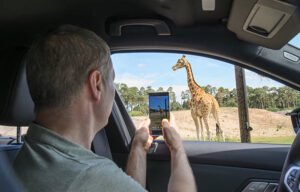
Yes. Smartphones can produce attractive environmental images and videos, particularly when elephants are visible at an appropriate distance. Avoid leaning outside the vehicle or moving too close for a photo.
Should I Bring a Tripod?
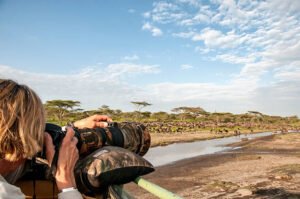
For vehicle-based game drives, a beanbag or suitable compact support is often easier to use than a full tripod. Check space limitations before bringing large equipment.
What About Lens Dust?
Carry a protective cloth, lens cap and suitable camera bag. Avoid changing lenses unnecessarily when dusty conditions are present.
Recommended Starting Camera Settings for Tarangire Elephant Photography
Exact exposure settings depend on your camera, focal length, subject movement, light and stabilization. Use the following as flexible starting points rather than fixed rules.
| Subject | Shutter Speed | Aperture | Additional Advice |
|---|---|---|---|
| Stationary Elephant Portrait | Around 1/500s or faster handheld | f/5.6–f/8 | Focus on the visible eye |
| Walking Elephant | 1/1000s or faster | f/5.6–f/8 | Use continuous autofocus |
| Active Calves | 1/1250–1/2000s where light permits | f/5.6–f/8 | Use burst mode selectively |
| Elephant with Baobab | According to movement and stability | f/8–f/11 | Capture animal and tree together |
| Backlit Dust | 1/1000s as a starting point | f/5.6–f/8 | Protect highlights and review exposure |
| Elephant Video | Based on frame rate and creative intent | According to desired depth | Use stabilization and avoid abrupt movement |
Should I Use Auto ISO?
Auto ISO with a suitable upper limit may help maintain shutter speed when conditions change. Review image noise and adjust settings for your own equipment.
Should I Shoot RAW?
RAW files provide flexibility for editing exposure and color. They also require more memory card space and post-processing time.
How Do I Photograph Dark Elephant Skin?
Check the histogram or image review, avoid losing highlight detail and adjust exposure according to the lighting. The right setting changes with the background.
Private 4×4 Tarangire Photography Safari with Pop-Up Roof
A dedicated vehicle can be one of the most useful investments for wildlife photography because it allows the travel party to discuss photography priorities rather than following a fixed sightseeing schedule.
Viewing arrangements
Pop-Up Roof
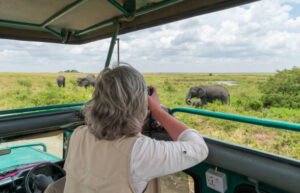
Allows suitable observation and photography from the vehicle without leaving designated wildlife-viewing areas.
Space for equipment
Camera Bag Storage
Vehicle capacity should account for camera bags, longer lenses, passengers and overnight luggage.
Flexible game drive
Longer Viewing Stops
Spend additional time with an animal sighting when the road position, other vehicles and park rules permit.
Practical support
Driver-Guide Communication
Discuss suitable light directions and natural animal behavior with your guide before positioning the vehicle.
Can One Photographer Have a Vehicle Alone?
Yes, a private solo photography safari may be arranged. Because the vehicle and guide expenses are not shared, it generally costs more per person.
Can I Request an Empty Seat Beside Me?
You can request reduced passenger occupancy for camera equipment and movement space. The agreed passenger limit and pricing should be included in the final quotation.
Is This a Guided Photography Workshop?
Not automatically. The standard product is a wildlife safari designed around photography priorities with a professional driver-guide. Specialist photography instruction is an optional service that must be booked separately.
Best 1–4 Day Tarangire Elephant Photography Safari Tours for 2026–2027
| Package | Photography Focus | Accommodation | Price |
|---|---|---|---|
| 1 Day Tarangire Photography Safari | Elephant portraits and baobab landscapes | No overnight | Custom Quote |
| 2 Day Tarangire Elephant Photo Tour | Two game-drive days with changing light | 1 night | Custom Quote |
| 3 Day Tarangire Photography Safari | Extended observation and diverse habitats | 2 nights | Custom Quote |
| 4 Day Tarangire and Ngorongoro Photo Tour | Elephants, baobabs and crater wildlife | 3 nights | Custom Quote |
These are customizable proposals rather than confirmed departures. Wildlife, lighting, availability and photo results are not guaranteed.
1 Day Tarangire Elephant Photography Safari from Arusha
This option is well suited to photographers with limited time who want a dedicated Tarangire day trip rather than a general multi-park itinerary.
Private photography day trip
1 Day / 0 Nights — Elephant and Baobab Photography
Early departure, guided photographic game drive, picnic lunch and return to Arusha.
- Early Morning — Arusha to Tarangire
Meet your driver-guide and travel toward Tarangire National Park. Discuss camera priorities and expected lighting before the game drive begins.
- Morning — Elephant and Baobab Photography
Explore accessible park roads, looking for elephant families and attractive environmental compositions among baobab trees, grasslands and woodland.
- Midday — Picnic Lunch and Observation
Stop at an approved picnic location. Continue watching wildlife while taking changing light and weather into account.
- Afternoon — Final Game Drive and Return
Continue photography from the safari vehicle before leaving the park within permitted hours and driving back to Arusha.
Day trip limitation: A one-day trip from Arusha may not provide the same access to low-angle morning and evening light as staying overnight in or near Tarangire.
2 Day Private Tarangire Elephant Photography Safari with Lodge Stay
Two days provide greater flexibility for photography. With a suitable overnight location, photographers can plan viewing around different light conditions and have more opportunities to observe elephant groups.
Recommended photo-focused itinerary
2 Days / 1 Night — Tarangire Elephant Photography
Extended wildlife observation with confirmed accommodation and private vehicle option.
Recommended for Wildlife Photographers
- Day 1 — Arusha to Tarangire Photography Drive
Depart early and travel to Tarangire National Park. After completing entry arrangements, spend time photographing elephants and baobab landscapes from authorized game-drive routes.
Rather than rushing between sightings, allow additional observation time when appropriate. Your guide may explore suitable riverine areas or open habitats based on wildlife movements and road conditions.
Enjoy a picnic lunch and continue photographing through the afternoon. Transfer to the confirmed lodge or campsite for dinner and overnight.
- Day 2 — Morning Elephant Behavior Photography
Begin according to the planned park access time. If accommodation is outside Tarangire, allow for the return journey and required entry arrangements.
Look for new wildlife opportunities, changing compositions and animal behavior. Where possible, revisit suitable areas under different light rather than trying to cover the entire park.
After lunch and the permitted game drive, return to Arusha.
3 Day Tarangire Elephant and Wildlife Photography Safari
Three days give photographers more room for patient observation, varied landscapes and potentially changing weather and light conditions.
Extended private elephant photography
3 Days / 2 Nights — Tarangire Wildlife Photography
Three safari days with two suitable lodge or camping nights.
- Day 1 — Arrival and Elephant Photography
Depart Arusha, enter Tarangire and focus on elephant habitats and baobab landscape compositions. Overnight at the confirmed property.
- Day 2 — Full-Day Photography-Focused Game Drive
Spend the day exploring permitted roads and observing wildlife behavior. Select practical photography locations according to sightings, light, vehicle access and guide advice. Enjoy a picnic lunch and return to your accommodation.
- Day 3 — Final Photography Session and Return
Enjoy another wildlife drive based on accommodation and permit conditions. Search for fresh scenes rather than assuming animals remain where they were previously photographed. Return to Arusha after the safari.
Why Three Days?
More time gives you room to photograph different behavior and lighting conditions. It does not guarantee more animals, but it can reduce the pressure to capture everything on a single visit.
4 Day Tarangire and Ngorongoro Crater Wildlife Photography Safari
For travelers who want a wider range of species and landscapes, a four-day safari can combine Tarangire's elephants and baobabs with the grasslands and wildlife of Ngorongoro Crater.
Two-destination photographic adventure
4 Days / 3 Nights — Tarangire Elephants and Ngorongoro Wildlife
Two days of Tarangire wildlife photography followed by the Ngorongoro highlands and crater.
- Day 1 — Arusha to Tarangire
Travel to Tarangire for your first elephant and baobab photography game drive. Overnight in or near the park at the agreed accommodation.
- Day 2 — Additional Tarangire Elephant Photography
Explore suitable park roads with emphasis on natural elephant behavior, landscapes and the available light. Travel to your overnight accommodation along the route toward Karatu.
- Day 3 — Ngorongoro Crater Wildlife Photography
Descend into Ngorongoro Crater for a guided game drive. Look for lions, elephants, buffalo, zebras, hippos and other wildlife. Black rhinoceros sightings may be possible but are rare. Overnight at the agreed lodge.
- Day 4 — Return to Arusha
Enjoy breakfast and return to Arusha. A separate optional cultural stop may be added in advance if practical and appropriately arranged.
Best Tarangire Safari Accommodation for Early-Morning Elephant Photography
Accommodation location can affect how much time you spend driving before reaching a wildlife-viewing area. For photographers, a suitable lodge or campsite near authorized park access may be more valuable than an elaborate property requiring long transfers.
Simple outdoor option
Budget Camping
Suitable campsites with tents and bedding where included; site access and facilities vary.
Cost-conscious comfort
Budget Lodges
Practical accommodation outside the park, with transfer time factored into photography planning.
Safari comfort
Mid-Range Tented Camps
Comfortable rooms or tents, sometimes with locations that reduce driving time to suitable game-drive routes.
Premium photo experience
Luxury Tarangire Camps
Selected premium accommodation in or around Tarangire, depending on current availability and access arrangements.
Should I Stay Inside Tarangire?
An appropriately located in-park camp may be convenient for early starts, but not every property is close to a particular elephant habitat. Confirm the exact camp location and realistic driving schedule.
Can Photographers Camp?
Yes. Camping may be arranged at authorized sites. Ask about equipment storage, charging facilities, bedding and weather protection.
Are Camera Charging Facilities Guaranteed?
No. Power availability varies by lodge or campsite. Bring spare batteries and suitable backup storage.
Why a Private Tarangire Photography Safari May Be Better Than Group Joining
| Feature | Private Photo Safari | Shared Group Safari |
|---|---|---|
| Vehicle | Reserved for your booked party | Shared with other travelers |
| Photo Stops | Discussed with your guide | Based on group interests and itinerary |
| Camera Space | Can request fewer passengers | Depends on occupied seats |
| Accommodation | Selected according to availability | Usually preset |
| Price | May cost more for solo travelers | May cost less with shared vehicle expenses |
| Best For | Serious enthusiasts, couples and photo teams | Casual photography and budget travelers |
Can Beginners Book a Photography Safari?
Yes. Beginners are welcome, although formal camera lessons should be separately requested if needed.
Can I Travel with Another Photographer?
Yes. Two photographers can request a private 4×4 with suitable space for long lenses and camera bags.
Can Photographers Join an Existing Group?
Yes, if a shared safari date is confirmed. However, a standard group joining tour may not spend extended time at each sighting.
Tarangire Elephant Photography Safari Prices for 2026–2027
Pricing depends on the number of passengers, vehicle type, trip length, accommodation, current park fees and whether specialist photography services are requested.
Short Photo Safari
1 Day Tarangire
Custom QuotePrivate day trip prioritizing elephant and landscape photography.
Get 1 Day Price →Recommended
2 Day Elephant Photo Tour
Custom QuoteTwo game-drive days and a selected overnight stay.
Get 2 Day Price →Extended Tarangire
3 Day Photography Safari
Custom QuoteMore time for observing elephants and changing lighting conditions.
Get 3 Day Price →Two Wildlife Destinations
4 Day Tarangire and Ngorongoro
Custom QuoteElephants, baobab landscapes and crater wildlife photography.
Get 4 Day Price →What Determines the Price?
| Component | What It Covers | What to Confirm |
|---|---|---|
| Park Fees | Tarangire admission and vehicle charges | Current TANAPA tariff |
| 4×4 Vehicle | Game-drive vehicle, fuel and operations | Exclusive or shared use |
| Driver-Guide | Wildlife guiding and approved driving routes | Photo-focused expectations |
| Reduced Vehicle Occupancy | Extra camera space | Available vehicle and price |
| Accommodation | Lodges or approved campsites | Property and room type |
| Meals and Water | Daily meal arrangements | Accepted meal plan |
| Professional Photographer | Specialist tuition if requested | Separately quoted service |
| Equipment Rental | Optional camera or lens gear | Not automatically supplied |
| Transfers | Agreed pickup and drop-off | Arusha, Moshi or airport |
What's Included in a Tarangire Elephant Photography Safari?
Typically included when confirmed
Safari Package Services
- Suitable 4×4 safari vehicle
- Professional driver-guide
- Private vehicle when booked privately
- Tarangire park admission
- Agreed photography-focused game drives
- Accommodation for overnight packages
- Meals according to itinerary
- Drinking water during safari
- Agreed transport and transfers
- Applicable tour taxes
Normally excluded unless quoted
Additional Expenses
- International flights
- Tanzania visa
- Travel and medical insurance
- Guide tips
- DSLR or mirrorless camera equipment
- Lens or specialist camera rental
- Professional photography instructor
- Private filming or commercial permits
- Drone authorization
- Additional hotel nights
- Optional experiences not agreed
Photography permits: Personal still photography from ordinary authorized game drives differs from activities requiring special permission. Commercial filming, drones or unusual equipment setups may have extra authorization requirements. Confirm with TANAPA before arranging such work.
Responsible Elephant Photography and Tarangire National Park Rules
Ethical photography protects elephants and provides better opportunities to observe relaxed, natural behavior.
Never Block an Elephant's Path
Elephants need freedom to move between water, shade and feeding areas. A vehicle should never prevent them from continuing naturally.
Maintain Generous Distance
Use appropriate focal lengths and follow the guide's instructions. Avoid driving toward animals merely to create the appearance of a close encounter.
Watch for Signs of Discomfort
Elephant behavior should be interpreted by the guide. If a group appears disturbed or changes behavior because of the vehicle, increase distance when safe.
Do Not Ask for Off-Road Driving
Private photo tours use authorized park tracks. A camera lens or particular composition is not a reason to violate park rules.
Avoid Crowding Sightings
Respect other vehicles and park visitors. Patience and ethical positioning are more important than competing for the closest view.
No Feeding or Artificial Attraction
Never use food, playback sounds or other inappropriate methods to manipulate wild animals for a photograph.
Drone Photography Requires Authorization
Do not launch a drone in Tarangire without the necessary prior written permissions. A normal safari booking is not a drone permit.
The Best Photographic Encounter
An ideal sighting is one in which the elephants continue their natural behavior undisturbed and the photographer works with available light, distance and scenery.
Tarangire Elephant Photography Safari Packing Checklist
Camera essentials
Photography Equipment
- DSLR, mirrorless camera or smartphone
- Telephoto zoom lens
- Wider landscape lens
- Spare batteries
- Multiple memory cards
- Lens cloth and blower
- Camera dust protection
- Beanbag or compact support
- Backup storage if needed
Comfort and travel
Personal Safari Gear
- Lightweight safari clothes
- Warm layer for early morning
- Sun hat and sunglasses
- Closed shoes
- Sunscreen
- Insect repellent
- Binoculars
- Power bank
- Personal medication
- Small day bag
Can I Bring Two Cameras?
Yes. Using two camera bodies with different lenses can reduce lens changes in dusty conditions. Ensure your vehicle has adequate equipment space.
Will Camera Batteries Last All Day?
Battery life varies with temperature, autofocus, video recording and usage. Carry spares and check your lodge's charging facilities.
Should I Bring a Laptop?
For longer photography trips, a laptop or external storage device may help you organize and back up files. It is optional.
Tarangire Elephant Photography Safaris from Arusha, Moshi and Kilimanjaro Airport
Private Photo Safari from Arusha
Arusha is a practical starting point. Tarangire is generally around 2.5–3 hours away by road, depending on the hotel, traffic and entry route.
Photography Safari from Moshi
Moshi pickup may be arranged, but it adds driving time. For early wildlife photography, overnight accommodation closer to Tarangire can be useful.
JRO Airport Arrival
Kilimanjaro International Airport pickup may be arranged. Travelers arriving late should consider a hotel night before the safari.
After Kilimanjaro Climbing
A photography safari can follow a Kilimanjaro climb, allowing time to recover from the trek and organize camera equipment before departure.
Can I Continue to Ngorongoro or Serengeti?
Yes. Extended photography tours can combine Tarangire with Ngorongoro Crater, Serengeti or other suitable destinations, with separate fee and lodging arrangements.
How to Book the Best Tarangire Elephant Photography Safari for 2026–2027
Tell African Trek & Travel about your photography goals so the itinerary and vehicle arrangements can be planned appropriately.
- Choose Your Travel DatesShare the month and dates you prefer, including any flexibility.
- Decide How Many Days You WantChoose one day, two days, three days or a longer multi-park tour.
- Describe Your Camera EquipmentMention large telephoto lenses, tripods, camera bags or video equipment.
- Choose the Number of PhotographersTell us how many passengers will use the vehicle and whether you prefer extra seat space.
- Select Your Photo PrioritiesElephant behavior, baobab landscapes, dust, birds, video or other wildlife.
- Choose AccommodationRequest camping, mid-range lodge or premium accommodation.
- Review the QuoteConfirm guide services, vehicle occupancy, accommodation, park fees, meals and any special permits.
- Reserve Your SafariFinalize your booking after reviewing the agreed itinerary and payment conditions.
Photography-Specific Details to Share
Preferred dates, total travelers, number of photographers, focal lengths or equipment size, desired privacy, wildlife priorities, starting location and accommodation budget. Also mention if you require a specialist photography instructor rather than only a professional safari driver-guide.
Frequently Asked Questions About Tarangire Elephant Photography Safari Tours
Is Tarangire National Park good for elephant photography?
Yes. Tarangire is particularly known for elephant habitats and baobab scenery, making it an attractive destination for wildlife and environmental photography.
When is the best time to photograph elephants in Tarangire?
The main dry season from June to October is especially popular, although elephant photography opportunities exist in other months and sightings vary.
Is August or September better for elephant photography?
Both can be attractive dry-season months. Weather and wildlife locations vary, so neither guarantees better photographs on a particular day.
Can I see elephants beneath baobab trees?
Tarangire's landscape supports this photographic possibility, but a specific elephant and baobab composition cannot be guaranteed.
Can I photograph elephant families and calves?
Family groups and young elephants may be seen. All photography must maintain safe distances and avoid disturbing the animals.
Where are elephants commonly found in Tarangire?
Elephants use various habitats, including riverine areas, woodland and water sources. Locations change with rainfall and movement patterns.
What is the best lens for elephant photography?
A 100–400mm zoom is a flexible option, while shorter focal lengths are helpful for elephants in the landscape. Longer lenses may be useful for distant animals.
Is a 70–200mm lens enough?
It can be useful for large animals and environmental compositions, depending on distance. Additional reach provides options for more distant subjects.
Do I need a 600mm lens?
No. Such a lens can be helpful for distant subjects but is not necessary for all elephant photography.
Can I photograph elephants with my phone?
Yes. Smartphones can capture beautiful landscape and wildlife images at suitable distances, especially where animals are clearly visible.
What shutter speed should I use for moving elephants?
A starting point around 1/1000 second or faster may help freeze walking movement, but the correct setting depends on light, camera, distance and focal length.
What time of day gives the best elephant photographs?
Early morning and late afternoon often provide attractive lower-angle light. Park visiting rules and accommodation location determine practical access.
Can I request sunrise photography?
You can request an early schedule, but actual photography inside the park is subject to permitted entry and game-drive hours.
Can I photograph elephants during the green season?
Yes. Greener vegetation and cloud formations offer different photographic possibilities, though wildlife may be distributed more widely.
Is a private safari better for photography?
Private transport can provide more flexibility in observation time and vehicle space, subject to park rules and the day's conditions.
Can I book a private vehicle for one photographer?
Yes. An exclusive-use vehicle can be arranged for a solo photographer, with a custom quotation.
Can I bring a large telephoto lens?
Yes. Share equipment details before booking so the correct vehicle and available space can be discussed.
Are photography instructors included?
Not in a standard guided safari. A specialist photography instructor must be separately requested and confirmed.
Can I ask the guide to drive off-road for a photograph?
No. Standard safari game drives must follow authorized tracks and all relevant park rules.
Can I use a drone in Tarangire National Park?
Drone use requires prior written authorization from the relevant authorities. It is not included in a normal safari booking.
How many days should I spend photographing elephants?
Two or three days are useful for enthusiasts who want more observation time, although a one-day photo safari is possible.
Can I camp during an elephant photography tour?
Yes. Camping may be arranged at approved campsites with appropriate equipment and bookings.
Can I combine Tarangire and Ngorongoro photography?
Yes. Four-day or longer tours can combine elephants and baobab landscapes with Ngorongoro Crater wildlife photography.
Can I photograph lions or giraffes as well?
Yes. Tarangire supports many wildlife species, but sightings depend on natural movements and are not guaranteed.
Is this tour suitable for beginner photographers?
Yes. Beginners can enjoy a photo-focused game drive. Formal technical instruction must be requested separately.
Do you provide camera gear?
Personal cameras, lenses and accessories are not normally included. Any equipment rental would require a separate confirmed arrangement.
Can I start my photography safari from Moshi?
Yes. Moshi pickup can be arranged, although longer travel time may affect the game-drive schedule.
Are park fees included in the photography safari?
Park entry and applicable vehicle charges should be clearly included in the accepted quotation.
What does a Tarangire elephant photography safari cost?
Costs depend on group size, private vehicle requirements, duration, accommodation and official fees. Request a personalized price.
How do I book a Tarangire elephant photography safari?
Contact African Trek & Travel on WhatsApp at +255 745 918 184 and share your dates, number of photographers, equipment requirements and preferred duration.
Book the Best Tarangire Safari Tour for Elephant Photography
Discover the beauty of Tarangire National Park through a safari planned around elephants, wildlife behavior, atmospheric landscapes and responsible photography. Observe elephant families, the towering baobabs and riverine habitats with an experienced Tanzania safari driver-guide.
Choose a private one-day elephant photo safari, a recommended two-day photography tour, a three-day extended Tarangire experience or a four-day journey combining Tarangire and Ngorongoro. We can arrange suitable 4×4 safari vehicles, selected lodges, budget camping, park fees, meals and agreed transfers.
Tell us your photography goals, camera equipment, preferred travel dates and number of photographers. African Trek & Travel will help create a tailored 2026–2027 wildlife photography safari quotation with clear inclusions and practical field arrangements.
Get My Personalized Elephant Photography Safari Quote →African Trek & Travel · Moshi, Tanzania · WhatsApp: +255 745 918 184