Local Tour Operator – African Trek & Travel Tanzania Safari...
Read More
African Trek & Travel | Serengeti Wildlife Photography Safaris
Best Serengeti Great Migration Photography Safari and River Crossings
Experience the best Serengeti Great Migration Photography Safari and River Crossings for 2026–2027 with African Trek & Travel. Photograph enormous wildebeest herds, possible Mara River crossings, lions, cheetahs, leopards and breathtaking Serengeti landscapes on a privately guided Tanzania wildlife photography adventure. Choose personalized photographic safaris, dedicated 4×4 vehicles, carefully selected Northern Serengeti camps, extended migration-viewing days and customized 5-day to 10-day itineraries from Arusha or Moshi.
2026–2027 Photography Safaris
Mara River Crossings
Northern Serengeti
Wildlife Photography Guides
Private 4×4 Vehicles
5–10 Day Photo Safaris
Professional local safari arrangements · Seasonal wildlife photography · Animal sightings and river crossings cannot be guaranteed.
Jul–OctTraditional river season
Private 4×4Dedicated photography vehicle
3+ NightsSuggested northern stay
5–10 DaysCustom photography tours
General Overview
The Serengeti Great Migration Photography Safari and River Crossings is an extraordinary Tanzania wildlife adventure created for professional photographers, enthusiastic hobbyists, wildlife lovers, content creators and travelers hoping to capture the beauty of Africa's most celebrated annual animal migration. Every year, enormous wildebeest and zebra herds move through the vast Serengeti-Mara ecosystem in response to seasonal rains, grazing and water availability, providing spectacular photographic opportunities across the golden grasslands, river valleys, rocky kopjes and remote wilderness landscapes of Tanzania. During the traditional July to October migration period, visitors to Northern Serengeti may observe migrating wildebeest gathering near the famous Mara River around Kogatende and Lamai, where unpredictable river-crossing events sometimes take place. The combination of moving herds, dramatic animal behavior, natural dust, beautiful African light and resident predators creates an exciting environment for wildlife photography. Photographers may capture panoramic savannah landscapes, close-up portraits of giraffes and elephants, lions resting on rocky kopjes, cheetahs scanning open grasslands, large zebra groups and beautiful river scenery while enjoying the thrill of exploring one of the world's most famous wildlife ecosystems.
Our detailed guide to the best Serengeti Great Migration Photography Safari Packages and Mara River Crossings for 2026–2027 helps photographers select suitable travel dates, photographic locations, safari vehicles, accommodation and the number of wildlife-viewing days needed to create a rewarding Tanzania photography holiday. For travelers interested primarily in possible Mara River crossings, July through October is traditionally the most relevant period for Northern Serengeti, with August and September especially popular for Kogatende-based photographic safaris. However, the Great Migration offers different photographic subjects throughout the year: Ndutu and Southern Serengeti provide opportunities to photograph wildebeest calving and predator behavior during the January to March season, while Western Serengeti and the Grumeti region may be suitable for documenting northward-moving herds during parts of May and June. The precise location of the migration depends on natural conditions rather than a fixed calendar. A successful photographic safari should therefore prioritize the right seasonal habitat, enough nights in one region, comfortable access to camera equipment, appropriate wildlife-viewing opportunities and professional guiding that respects Tanzania National Parks regulations.
African Trek & Travel organizes private Serengeti Great Migration wildlife photography safaris with expert local guides, dedicated 4×4 safari vehicles, suitable tented camps and customized photographic itineraries. Our photography-focused packages can include Arusha hotel pickup, professional English-speaking safari driver-guides, private game drives, Serengeti National Park entrance fees, selected full-board accommodation, drinking water, arranged domestic flights and extended Northern Serengeti stays according to the confirmed quotation. Guests may request vehicle seating layouts suited to their photography equipment, assistance with suitable camera positioning, additional time at permitted wildlife viewpoints, flexible observation stops and tailored photographic priorities. Our private tours are suitable for solo photographers, couples, small photography groups, filmmakers and travelers who simply enjoy taking memorable wildlife images. Available itinerary ideas include five-day Northern Serengeti fly-in photography safaris, seven-day Serengeti and Ngorongoro photography holidays, eight-day Great Migration and Mara River adventures and longer ten-day premium photographic tours. This comprehensive guide covers seasonal migration photography, best destinations, private vehicle arrangements, recommended camera equipment, exposure techniques, ethical Mara River photography, detailed safari itineraries, accommodation, prices, inclusions, booking guidance and frequently asked questions.
Photography safari advisory: A river-crossing photograph cannot be guaranteed. Wildebeest may gather at a crossing point, hesitate, move away or cross unexpectedly. All photography must be carried out from authorized areas without disturbing wildlife or restricting animal movement.
Highlights of Our Great Migration Photography Safaris
- Photograph the spectacular Serengeti wildebeest migration.
- Explore possible Mara River crossing activity in Northern Serengeti.
- Use a dedicated private 4×4 safari vehicle when booked.
- Travel with an experienced professional local safari guide.
- Enjoy photography-focused wildlife observation stops.
- Search for lions, cheetahs, leopards and hyenas.
- Photograph elephants, giraffes, zebras and antelopes.
- Capture beautiful Serengeti sunrise and sunset light where permitted.
- Stay in selected camps near suitable migration viewing routes.
- Choose private five-day to ten-day photography safari packages.
- Add Central Serengeti and Ngorongoro Crater photography.
- Arrange seasonal Ndutu calving photography itineraries.
Why Choose a Serengeti Great Migration Photography Safari?
A photography-focused safari prioritizes observation time, vehicle comfort and suitable photographic subjects. It differs from a standard sightseeing tour that may move frequently between destinations.
Dedicated photographic opportunities
More Time Observing Wildlife
Spend appropriate time photographing natural wildlife behavior instead of rushing between distant game-drive areas.
Flexible private guiding
Experienced Safari Driver-Guide
Benefit from local wildlife knowledge, careful guiding and practical observation opportunities.
Camera-friendly transport
Private 4×4 Safari Vehicle
Request suitable seating and space for lenses, camera bags, beanbags and other equipment.
Seasonal migration exploration
Correct Wildlife Locations
Select Northern, Western or Southern Serengeti according to the season and desired photography subjects.
Is a photography safari only for professional photographers?
No. Enthusiastic beginners, smartphone photographers, experienced photographers and content creators can all enjoy a private wildlife photography tour.
Can I request specific photographic subjects?
Yes. Share your interest in river crossings, big cats, elephants, birds, landscapes or the calving season before the itinerary is prepared.
Can the vehicle remain longer near wildlife?
A private guide can plan suitable observation stops within park rules, access restrictions and the agreed safari schedule.
Best Time for Serengeti Great Migration Photography and River Crossings
The best month for Serengeti photography depends on the wildlife subjects you wish to capture.
| Months | Traditional Migration Area | Photography Opportunities | Recommended Tour |
|---|---|---|---|
| January–March | Ndutu and Southern Serengeti. | Calving herds, newborn animals, predators and open plains. | Private Ndutu photography safari. |
| April–May | Southern, Central and moving western herds. | Green landscapes, dramatic clouds and moving herds. | Flexible green-season photo safari. |
| May–June | Western Corridor and Grumeti region. | Northward-moving herds, seasonal wildlife and river landscapes. | Western Serengeti photography tour. |
| July | Moving northern herds; location varies. | Migration landscapes and possible early Mara River activity. | Flexible Central-to-Northern Serengeti photography. |
| August–September | Northern Serengeti and Mara River ecosystem. | Potential river crossings, large herds and predators. | Private Kogatende photography safari. |
| October | Northern and changing central migration areas. | Possible later crossings and southward-moving herds. | Northern and Central Serengeti photo safari. |
| November–December | Central, Eastern and Southern Serengeti areas. | Greener landscapes and changing herd movements. | Flexible Serengeti photographic safari. |
This calendar describes broad historical migration trends rather than a forecast of future animal positions. Photographic conditions and subjects vary annually.
What is the best time for Mara River photography?
July through October is traditionally the main northern river-crossing season, with August and September particularly popular for planning Mara River photography safaris.
What is the best season for newborn wildebeest photography?
The southern calving season is generally associated with January through March, often centered around February.
Can I photograph the migration in June?
Yes. Suitable Western Serengeti habitats may offer opportunities to photograph northward-moving herds and river landscapes.
Best Serengeti Locations for Migration Photography and River Crossings
Possible river-crossing photography
Kogatende and Mara River
Explore authorized northern crossing-viewing points during the traditional river-crossing season.
Scenic northern wildlife
Lamai and Northern Plains
Photograph beautiful rolling hills, herds, resident predators and expansive landscapes.
Year-round big cats
Central Serengeti
Discover rocky kopjes, riverine habitats and resident lions, leopards, cheetahs and giraffes.
Calving-season subjects
Ndutu and Southern Serengeti
Photograph wildebeest calves, green or golden grasslands and natural predator behavior during suitable months.
Seasonal western migration
Western Serengeti and Grumeti
Explore seasonal herds, wooded landscapes and river habitats when wildlife movements favor the region.
Additional wildlife photography
Ngorongoro Crater
Photograph a variety of resident species against the dramatic scenery of the volcanic caldera.
Which destination should I prioritize for river crossings?
Northern Serengeti near Kogatende is one of the most important Tanzanian regions to consider during the traditional Mara River season.
Which location is best for photographing lions?
Central Serengeti provides worthwhile resident predator opportunities throughout the year. Sightings remain unpredictable.
Should I combine different Serengeti regions?
Yes, if your safari duration allows. Northern and Central Serengeti can provide complementary migration and resident wildlife subjects.
Mara River Crossing Photography Safari — What to Expect
Mara River crossing photography is one of the most challenging and exciting experiences for wildlife enthusiasts. Success depends on patience, timing, suitable viewing positions and natural animal behavior.
Photographing wildebeest approaching the river
Large groups may gather on grasslands and riverbanks. Photographers can create wide photographs of the herd, environmental portraits and patterns formed by animal movement.
Photographing the crossing itself
If a crossing occurs while you are stationed at a designated viewing point, you may have opportunities to photograph moving animals, splashing water, large herd formations and dramatic natural behavior.
Photographing animals after crossing
Animals emerging from the river can provide compelling wildlife subjects, including movement, water droplets and interaction between different herd members.
Waiting patiently for wildlife
Wildebeest may wait for hours and then move away without crossing. A good photographic safari should provide additional opportunities to photograph surrounding wildlife and landscapes.
Responsible vehicle positioning
Your guide must use designated river viewpoints and obey the required vehicle positions, distances and limits. Photographers cannot request off-road driving, restricted riverbank access or the disruption of animals for a better angle.
Photography priority: natural behavior over staged encounters
The most meaningful wildlife photographs come from natural behavior observed respectfully. Never ask a guide to chase, block, pressure or provoke animals to create an action photograph.
Best Serengeti Great Migration Photography Safari Packages 2026–2027
| Photography Package | Duration | Key Wildlife Focus | Recommended Traveler |
|---|---|---|---|
| 5 Day Mara River Photography Safari | 5 Days / 4 Nights | Possible river crossings and northern wildlife. | Short private photo expedition. |
| 6 Day Northern Serengeti Photo Safari | 6 Days / 5 Nights | Extended herds, predators and Mara River scenery. | Dedicated migration photographers. |
| 7 Day Serengeti and Ngorongoro Photo Safari | 7 Days / 6 Nights | Northern migration, Central Serengeti and crater wildlife. | Balanced photography holiday. |
| 8 Day Great Migration River Crossing Photography Safari | 8 Days / 7 Nights | Tarangire, Central Serengeti, Kogatende and Ngorongoro. | Comprehensive photographic journey. |
| 9 Day Private Serengeti Photography Safari | 9 Days / 8 Nights | Extra wildlife observation and multiple safari landscapes. | Experienced photographers. |
| 10 Day Luxury Migration Photography Safari | 10 Days / 9 Nights | Premium camps, northern migration and big-cat photography. | Luxury photographic expedition. |
| 6 Day Ndutu Calving Photography Safari | 6 Days / 5 Nights | Young wildebeest and southern plains wildlife. | January–March photographers. |
Which package is best for river crossings?
A five-day or six-day fly-in Northern Serengeti safari offers several nights in the migration region. Longer trips can incorporate additional photographic destinations.
Is the eight-day safari good for first-time photographers?
Yes. It combines migration-focused opportunities with multiple wildlife landscapes and allows guests to develop varied photographic portfolios.
Can the itinerary be customized for a photography group?
Yes. Group size, vehicle seating, accommodation, equipment requirements and subjects can be considered during safari planning.
Serengeti Great Migration Photography Safari and River Crossing Prices 2026–2027
A private photographic safari quotation depends on the duration, number of guests, migration season, accommodation and special arrangements for private vehicles.
| Safari Option | Accommodation Category | Price Per Person | Pricing Factors |
|---|---|---|---|
| 5 Day Mara River Photo Safari | Mid-Range Camp | Custom Quote | Fly-in arrangements and northern camp nights. |
| 6 Day Northern Serengeti Photography | Mid-Range or Luxury | Custom Quote | Extended guiding and seasonal accommodation. |
| 7 Day Migration and Ngorongoro Photo Safari | Selected Lodges | Custom Quote | Transport, conservation fees and accommodation. |
| 8 Day Private River Crossing Photo Safari | Camping or Mid-Range | Custom Quote | Private vehicle, northern nights and park fees. |
| 9 Day Dedicated Photography Safari | Selected Tented Camps | Custom Quote | Photographic vehicle configuration and group size. |
| 10 Day Luxury Photo Expedition | Premium Lodges and Camps | Premium Custom Quote | Luxury accommodation and flight arrangements. |
| 6 Day Ndutu Calving Photo Safari | Seasonal Tented Camp | Custom Quote | Calving season accommodation and private guiding. |
No fixed 2027 prices or available seats are represented as confirmed. Camera equipment rental, specialized photographic accessories and instructor services are not included unless specifically stated.
Why can a photography safari cost more?
The tour may require a private vehicle with fewer photographers, additional observation days, specialist arrangements or accommodation near remote migration areas.
Does the package include a photography instructor?
Not automatically. A professional wildlife driver-guide and a dedicated photography instructor are different services. Any specialist instructor must be separately requested and confirmed.
Can two photographers share one private vehicle?
Yes. Private vehicle arrangements can be quoted for two photographers or larger groups, subject to equipment space and seating requirements.
Request Photography Safari Prices →Private 4×4 Safari Vehicles for Serengeti Wildlife Photography
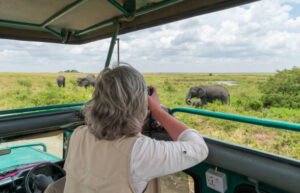
A well-planned safari vehicle makes a significant difference when photographing wildlife with long lenses, multiple camera bodies and other equipment.
Dedicated private Land Cruiser
A private vehicle helps guests organize camera equipment, make suitable photography requests and avoid competing with unrelated travelers for viewing positions.
Pop-up photographic viewing roof
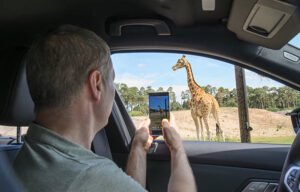
A standard safari pop-up roof provides a convenient viewing position in many habitats. Shooting from a seated side window may also be useful.
Space for cameras and telephoto lenses
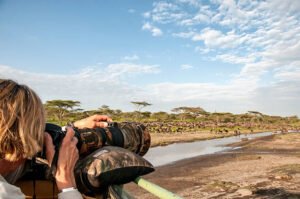
Tell the booking team how many photographers and large lenses you will bring. A smaller number of guests per vehicle can improve comfort and camera handling.
Camera beanbags
Beanbags can provide stable support on suitable window frames or viewing surfaces without the complexity of a tripod.
Charging and power
Confirm vehicle charging ports and camp electricity arrangements before the safari. Carry spare batteries and a suitable power bank.
Vehicle configuration: A specialized photographic roof, open-sided vehicle, rotating seat, camera mount or other equipment is not guaranteed as part of a standard Land Cruiser. Request any specific setup in writing before booking.
Best Camera Equipment and Settings for Serengeti Great Migration Photography
Camera recommendations depend on your equipment, experience, lighting and whether animals are stationary or moving quickly.
| Photography Subject | Possible Shutter Speed | Lens / Framing Idea | Practical Tip |
|---|---|---|---|
| Fast wildebeest movement | Approximately 1/1000–1/2000 sec. | Telephoto or flexible zoom. | Use continuous autofocus and burst shooting as appropriate. |
| Running cheetah or fast action | Approximately 1/1600–1/3200 sec. | Long telephoto. | Prioritize sharp focus and sufficient ISO. |
| Stationary lion portraits | Approximately 1/250–1/800 sec. | Medium to long telephoto. | Focus carefully on the animal's eyes. |
| Elephants and giraffes | Approximately 1/250–1/1000 sec. | Flexible mid-range zoom. | Include environmental context when appropriate. |
| Landscape and large herds | Depends on light and support. | Wide-angle or standard zoom. | Include leading lines and the scale of the landscape. |
| Birds in flight | Approximately 1/1600–1/3200 sec. | Telephoto. | Use tracking autofocus where available. |
These are general starting points, not fixed settings. Adjust according to focal length, light levels, subject motion, stabilization, camera characteristics and artistic intent.
Recommended lenses
- 100–400 mm or similar telephoto zoom for versatile wildlife photography.
- 200–600 mm or similar long telephoto for distant animals.
- 24–70 mm or comparable standard zoom for camp, landscape and environmental images.
- 16–35 mm or similar wide-angle lens for expansive Serengeti scenery.
- Optional second camera body to reduce lens changes in dusty conditions.
Should I use continuous autofocus?
Continuous or tracking autofocus can help photograph moving wildebeest, predators and birds. Select the mode appropriate to your camera.
Should I shoot RAW photographs?
RAW capture offers greater editing flexibility for changing lighting, highlights, shadows and white balance. JPEG can also be appropriate depending on your workflow.
Do I need a professional camera?
No. A modern bridge camera, mirrorless camera, DSLR or smartphone can capture memorable wildlife photographs, although longer lenses help with distant subjects.
Photography Tips for Mara River Crossings, Wildebeest Herds and Serengeti Predators
Capture the complete wildlife story
Photograph wide scenes showing the landscape, medium-distance herd compositions and close-up wildlife portraits where distance permits.
Use suitable fast shutter speeds
When animals move quickly, use a fast shutter speed to help freeze the action. Raise ISO if required to maintain adequate exposure.
Plan around the direction of light
Low morning or late afternoon sunlight can create attractive detail and warm colors, but wildlife location and park restrictions determine the available angles.
Photograph behavior rather than only portraits
Interesting moments include grazing, herd interactions, elephants communicating, lions resting together, antelopes moving and birds in flight.
Leave space in the direction of movement
For running animals, a composition with space ahead of the subject can help communicate motion.
Use burst shooting selectively
Short bursts can improve your chances of capturing the desired body position or facial expression without producing unnecessary thousands of files.
Protect equipment from dust
Carry a protective cover and keep lens changes to a minimum when conditions are dusty.
Stay patient
Natural wildlife photography often involves waiting. Avoid pressuring your guide or animals for an immediate photograph.
8 Day Serengeti Great Migration Photography Safari and Mara River Crossings — Day-by-Day Itinerary
This private road-based itinerary is designed primarily for the traditional July–October northern migration season. For other months, the migration destination and accommodation should be adapted.
Featured 8 Day / 7 Night Private Wildlife Photography Safari
Tarangire, Central Serengeti, Northern Serengeti, Mara River and Ngorongoro
Three nights in Northern Serengeti, two nights in Central Serengeti and two nights near Karatu, with a private safari vehicle and professional guide.
DAY 01
Arusha to Tarangire National Park — Elephant and Savannah Photography
Begin your Tanzania photography safari with pickup from your confirmed hotel in Arusha. Meet your professional local driver-guide and review the planned itinerary, preferred photography subjects, camera equipment and vehicle arrangements.
Travel to Tarangire National Park, famous for large elephant populations, magnificent baobab trees and beautiful savannah landscapes.
After entering the park, begin your private wildlife game drive along authorized routes.
Search for elephants, giraffes, zebras, buffalo, antelopes, lions and numerous bird species.
Tarangire's combination of giant trees and wildlife can provide excellent opportunities for environmental animal portraits.
Enjoy suitable stops for landscape and wildlife photography whenever conditions and park rules permit.
Have a picnic lunch at an authorized area and continue the afternoon game drive.
Later, leave the park and travel toward Karatu for dinner and overnight accommodation.
Accommodation: Selected Karatu lodge or campsite.
Meals: As confirmed in the package.
Photography Focus: Elephants, baobabs, giraffes and savannah compositions.
DAY 02
Karatu to Central Serengeti — Wildlife and Landscape Photography
Enjoy breakfast and depart toward Serengeti National Park through the scenic Ngorongoro highlands.
The route includes spectacular landscape transitions from cooler highland habitats to expansive Serengeti grasslands.
Your professional guide will complete required conservation-area and park entry arrangements.
Continue toward Central Serengeti, exploring suitable wildlife-viewing roads along the way.
Search for lions, elephants, giraffes, buffalo, zebras, antelopes and other wildlife.
Photographic opportunities may include beautiful kopjes, open savannah, tree silhouettes and resident wildlife.
Enjoy a picnic lunch and continue toward your selected Central Serengeti camp.
Arrive for dinner and overnight.
Accommodation: Central Serengeti tented camp or lodge.
Meals: Breakfast, lunch and dinner.
Photography Focus: Landscapes, resident wildlife and scenic Serengeti habitats.
DAY 03
Central Serengeti to Northern Serengeti — Migration Herd and Wildlife Photography
After breakfast, depart Central Serengeti and travel toward the remote Northern Serengeti region.
The journey passes through different habitats, rolling hills and beautiful wilderness landscapes.
Your guide will identify suitable wildlife opportunities along authorized routes while allowing sufficient time to reach the northern accommodation.
During the appropriate migration season, wildebeest and zebra herds may be encountered along suitable parts of the route.
Photographers may capture grazing herds, animals moving across the plains and wider landscapes showing the scale of the Serengeti ecosystem.
Enjoy a picnic lunch at a permitted location.
Continue toward your selected Northern Serengeti camp near Kogatende or another appropriate area.
Arrive for dinner and overnight, ready for the following day's Mara River photography.
Accommodation: Northern Serengeti tented camp.
Meals: Breakfast, lunch and dinner.
Photography Focus: Migration herds, northern landscapes and resident predators.
DAY 04
Full Day Mara River — Wildebeest Crossing Photography Safari
Begin the day with breakfast and prepare your camera batteries, memory cards, lenses and protective equipment.
Depart with your professional guide for a full-day exploration of suitable Northern Serengeti wildlife habitats and authorized Mara River viewpoints.
Your guide will search for wildebeest and zebra herds that may be gathering around the river during the migration season.
If herds are present, observe their natural behavior from designated vehicle positions.
Wildebeest may approach a riverbank, hesitate for extended periods, move away or attempt a crossing unexpectedly.
If a crossing occurs while your vehicle is at an approved viewing point, you may have opportunities to photograph fast-moving animals, splashing water and dramatic herd formations.
Use appropriate shutter speeds and continuous autofocus when photographing movement, while respecting the permitted viewing location.
Photograph the surrounding landscapes and other wildlife even if no crossing takes place.
Enjoy a picnic lunch at an authorized location away from prohibited riverbank areas.
Return to your northern camp for dinner and overnight.
Accommodation: Northern Serengeti tented camp.
Meals: Breakfast, lunch and dinner.
Photography Focus: Possible river crossings, wildebeest herds and natural movement.
DAY 05
Extended Northern Serengeti Photography — Predators, Herds and River Habitats
Spend another full day exploring Northern Serengeti with your dedicated driver-guide.
The second full northern photography day provides more opportunities to observe the migration and search for other wildlife.
Your guide can select suitable game-drive routes according to current animal movements and park restrictions.
Photograph wildebeest and zebra herds if present, along with lions, cheetahs, leopards, giraffes, elephants and other resident animals.
If appropriate herd activity is observed near authorized river viewpoints, another Mara River visit may be arranged.
Try different photographic perspectives, including wildlife portraits, environmental compositions and scenic landscapes.
Use suitable vehicle supports for longer lenses and keep spare batteries accessible.
Enjoy a packed lunch at an authorized location before continuing afternoon wildlife photography.
Return to your camp for dinner and the final northern overnight.
Accommodation: Northern Serengeti camp.
Meals: Breakfast, lunch and dinner.
Photography Focus: Additional migration opportunities and predator wildlife.
DAY 06
Northern Serengeti to Central Serengeti — Wildlife and Savannah Photography
Enjoy breakfast before leaving Northern Serengeti and beginning the scenic journey back toward Central Serengeti.
Travel along permitted routes through open grasslands, woodlands and beautiful Serengeti wilderness.
Your guide will identify suitable photography stops while ensuring the day's transfer is completed comfortably.
Search for giraffes, zebras, elephants, buffalo, lions and other animals.
Depending on the season, wildebeest may be encountered along suitable parts of the route.
Photograph changing landscapes and wildlife in their natural habitat.
Enjoy a picnic lunch at an appropriate location.
Arrive at your Central Serengeti accommodation for dinner and overnight.
Accommodation: Central Serengeti lodge or tented camp.
Meals: Breakfast, lunch and dinner.
Photography Focus: Wildlife landscapes, plains animals and scenic compositions.
DAY 07
Central Serengeti Big-Cat Photography and Transfer to Karatu
After breakfast, enjoy a scheduled wildlife-viewing drive through suitable Central Serengeti habitats.
The region is well known for rocky kopjes, riverine environments and resident predator populations.
Search for lions resting or moving naturally, leopards in suitable habitats and cheetahs across open grasslands.
A private guide can help identify appropriate wildlife observation opportunities without disturbing animals.
Capture portraits, environmental wildlife scenes and the beautiful Serengeti landscape.
After the scheduled game-drive period, begin the transfer toward the Ngorongoro Conservation Area and Karatu.
Enjoy lunch and scenic stops at permitted locations.
Arrive at your selected lodge in Karatu for dinner and overnight.
Accommodation: Karatu lodge.
Meals: Breakfast, lunch and dinner.
Photography Focus: Big cats, kopjes and Ngorongoro highland scenery.
DAY 08
Ngorongoro Crater Photography Safari and Return to Arusha
Begin the final safari day with an early breakfast and depart toward Ngorongoro Crater.
Your guide will arrange the required conservation-area and crater entry procedures.
Descend into the magnificent caldera and begin exploring authorized wildlife-viewing routes.
Search for lions, elephants, buffalo, hippos, zebras, wildebeest and numerous bird species.
Ngorongoro is also home to endangered black rhinoceroses, although sightings cannot be guaranteed.
Photograph wildlife against scenic grasslands, crater walls, lakeshore habitats and beautiful volcanic landscapes.
Enjoy a picnic lunch at an approved site and continue the scheduled crater excursion.
After the game drive, ascend from the crater and travel back toward Arusha.
Arrive at the agreed hotel or drop-off point, completing your eight-day private Great Migration photography safari.
Accommodation: End of safari.
Meals: Breakfast and picnic lunch.
Photography Focus: Crater wildlife, landscapes and diverse African animals.
Featured safari photography advantage
This itinerary combines several northern migration-viewing days with resident big-cat habitats and iconic Tanzanian landscapes. It is most suitable for the traditional July–October northern season. Photographers interested in the January–March calving season should request a different route focused on Ndutu and Southern Serengeti.
5 Day Mara River Crossing Photography Safari — Northern Serengeti Fly-In Tour
A five-day fly-in safari is suitable for photographers who want to maximize their time in Northern Serengeti rather than spend several days traveling by road from Arusha.
| Day | Destination | Photography Experience | Overnight |
|---|---|---|---|
| 1 | Arusha to Kogatende | Flight, guide meeting and introductory wildlife photography. | Northern Serengeti |
| 2 | Mara River | Full-day migration and authorized river-viewing photography. | Northern Serengeti |
| 3 | Kogatende | Wildlife portraits, migration herds and predator photography. | Northern Serengeti |
| 4 | Northern Serengeti | Additional wildlife observation and possible river activity. | Northern Serengeti |
| 5 | Northern Serengeti to Arusha | Airstrip transfer and confirmed return flight. | End of safari |
Is five days enough for river photography?
Five days can provide several dedicated northern wildlife-viewing opportunities. Additional nights may offer more time for observation but do not guarantee crossing activity.
Are private vehicles available for fly-in safaris?
Yes, when arranged and confirmed. Some camps otherwise provide shared game drives, so your private vehicle requirement must be specified.
Request 5 Day Photo Safari →6 Day Ndutu Wildebeest Calving and Predator Photography Safari
For guests visiting during the southern calving season, Ndutu can be more suitable than Northern Serengeti for capturing wildebeest calves, large herds and natural predator behavior.
| Day | Destination | Photography Focus | Overnight |
|---|---|---|---|
| 1 | Arusha to Tarangire | Elephants, baobab trees and grassland wildlife. | Karatu |
| 2 | Karatu to Ndutu | Highland landscapes and southern plains wildlife. | Ndutu |
| 3 | Ndutu | Full-day calving herds and natural predator photography. | Ndutu |
| 4 | Ndutu | Second full-day wildlife and behavior photography. | Ndutu |
| 5 | Ndutu to Karatu | Morning photography and highland transfer. | Karatu |
| 6 | Ngorongoro Crater to Arusha | Crater wildlife photography and return. | End of safari |
The precise location and timing of calving activity depend on rainfall and grazing. Wildlife behavior and sightings cannot be guaranteed.
10 Day Luxury Serengeti Great Migration Photography Safari
A ten-day private safari is suitable for photographers seeking more observation time and a broader range of wildlife subjects.
| Day | Destination | Photography Focus |
|---|---|---|
| 1 | Arusha to Tarangire | Elephants and baobabs. |
| 2 | Tarangire to Karatu | Additional elephant habitats and scenery. |
| 3 | Karatu to Central Serengeti | Serengeti plains and resident animals. |
| 4 | Central Serengeti | Full-day lion, leopard and cheetah photography. |
| 5 | Central to Northern Serengeti | Migration-region landscapes and herds. |
| 6 | Mara River | Possible crossing photography. |
| 7 | Northern Serengeti | Extended migration and predator photography. |
| 8 | Northern Serengeti | Additional wildlife observation and landscapes. |
| 9 | Northern to Central Serengeti | Scenic game viewing and return to central habitats. |
| 10 | Central Serengeti to Arusha | Confirmed domestic flight or separately planned onward travel. |
This proposed itinerary uses a flight out on Day 10 to avoid an excessively long same-day road transfer to Arusha. Exact airstrip, lodging, flight and park logistics must be confirmed.
Best Serengeti Migration Camps for Wildlife Photographers
A good photography camp should support convenient wildlife access, rest, meal arrangements and camera battery charging.
| Camp / Area | Region | Accommodation Type | Photography Considerations |
|---|---|---|---|
| Sayari Camp | Northern Serengeti | Luxury tented camp. | Premium northern safari base. |
| Lemala Kuria Hills | Wogakuria Hills | Luxury lodge. | Beautiful northern scenery and comfort. |
| Lemala Mara Tented Camp | Seasonal Northern Serengeti | Migration tented camp. | Confirm the specific seasonal location. |
| Lamai Serengeti | Lamai region | Luxury wilderness lodge. | Scenic northern habitats. |
| Mara Mara Tented Lodge | Northern Serengeti | Upscale tented lodge. | Suitable northern wildlife base. |
| Central Serengeti Tented Camps | Seronera region | Mid-range to luxury. | Resident predator photography. |
| Ndutu Seasonal Camps | Southern migration region | Mobile and tented camps. | Calving-season photography. |
These accommodation options are not confirmed reservations. Exact locations, seasonal operations, battery charging, internet access and 2027 rates must be checked.
Do photography camps provide electricity?
Power availability varies. Ask whether camera batteries can be charged in your room, tent or designated communal area.
Is Wi-Fi available at migration camps?
Some camps provide internet access, but remote connectivity may be limited. Offline storage and backup options are recommended.
How to Protect and Back Up Your Safari Photographs
Carry enough memory cards
Wildlife action sequences can produce many images. Bring sufficient high-quality memory cards for your planned shooting volume.
Back up photographs where practical
Use a laptop or portable storage device if available. Maintain at least two copies of important images whenever possible.
Bring spare batteries
Remote safari camps may have restricted charging hours. Prepare enough batteries for long game drives.
Protect gear from dust and rain
Carry appropriate covers, cleaning supplies and a secure camera bag.
Organize daily photo files
Label and review photographs by date, park and wildlife subject to simplify post-trip editing.
Review flight baggage limits
Domestic light-aircraft flights may impose strict weight and luggage-shape restrictions. Confirm your camera equipment allowance before booking.
Private Serengeti Wildlife Photography Safari with Experienced Local Guides
An experienced safari driver-guide helps visitors observe wildlife responsibly and make practical photography decisions in the field.
Animal behavior knowledge
Professional Wildlife Interpretation
Learn about animal movement, interactions, hunting ecology, grazing patterns and habitats.
Practical safari positioning
Responsible Viewing Locations
Use appropriate authorized viewing routes while respecting wildlife and other visitors.
Private group priorities
Flexible Observation Time
Focus more time on your selected photographic subjects when the itinerary and park rules permit.
Conservation-focused experience
Ethical Wildlife Photography
Capture natural behavior without feeding, chasing, blocking or disturbing animals.
Is a safari guide also a photography instructor?
Not necessarily. Safari driver-guides provide wildlife and local destination knowledge. Formal camera instruction must be separately confirmed if required.
Can I request a guide familiar with photographers?
Yes. Explain your experience level, equipment and preferred subjects when preparing the itinerary.
Private vs Group Serengeti Great Migration Photography Safari
| Feature | Shared Safari | Private Photography Safari |
|---|---|---|
| Vehicle | Shared with other guests. | Dedicated to your party. |
| Driver-Guide | Shared. | Dedicated professional guide. |
| Photo Stops | Group decisions. | Customized within park rules. |
| Equipment Space | Shared luggage and seating space. | Planned around your group. |
| Dates | Fixed confirmed departures. | Private requested dates. |
| Accommodation | Typically predetermined. | Selected by category and location. |
| Budget | Shared operating costs. | Depends on private group size. |
For serious wildlife photographers carrying long lenses and multiple camera bodies, a dedicated vehicle is often worth considering for additional space and personalized observation.
Animals to Photograph on a Serengeti Great Migration Safari
- Wildebeest herds and seasonal migration formations.
- Plains zebras and gazelles.
- African lions and natural pride interactions.
- Cheetahs on open grasslands.
- Leopards in suitable riverine and rocky habitats.
- Spotted hyenas and other carnivores.
- Elephants and calves.
- Giraffes and environmental savannah portraits.
- Nile crocodiles in river habitats.
- Hippos in suitable water areas.
- Vultures, eagles and smaller bird species.
- Ngorongoro Crater wildlife on combined packages.
Are predator action shots guaranteed?
No. Natural hunting and predator behavior are unpredictable and should never be provoked for photography.
Can we photograph wildebeest calves?
Yes, when calves are present during the appropriate southern migration season. Wildlife viewing must respect breeding and calving areas.
Ethical Mara River Crossing Photography and Serengeti Park Regulations
Professional wildlife photography should protect the integrity of the Serengeti ecosystem. A photograph is never more important than animal welfare or visitor safety.
- Observe river crossings from designated viewing points.
- Follow required vehicle positioning and distance limits.
- Remain stationary where crossing regulations require.
- Never obstruct wildebeest moving toward riverbanks.
- Do not chase or encourage herds into the water.
- Do not leave the vehicle in prohibited wildlife areas.
- Do not set up picnic tables along restricted riverbanks.
- Never feed or attract animals for photographs.
- Respect other vehicles and viewing limits.
- Follow guide and park ranger instructions.
- Do not use equipment or activities prohibited by park authorities.
- Keep the environment clean and avoid unnecessary disturbance.
Can photographers use drones in Serengeti?
Drone use is regulated and requires the appropriate authorization. Do not assume personal drones can be flown inside the national park without prior official approval.
Can we get out of the vehicle for a better angle?
Only in areas where disembarking is expressly permitted. Mara River crossing photography must follow designated viewing rules.
Can photographers drive off-road?
Vehicle access is subject to park regulations and authorized activities. Off-road access should never be assumed to be permitted.
What Is Included in a Serengeti Great Migration Photography Safari?
Typical Photography Safari Inclusions
- Professional English-speaking local safari driver-guide.
- Dedicated 4×4 safari vehicle where confirmed.
- Photography-oriented game-drive planning.
- Accommodation at selected lodges or tented camps.
- Meals according to the confirmed itinerary.
- National park entrance fees for included destinations.
- Ngorongoro charges when included in the route.
- Scheduled safari transportation and transfers.
- Drinking water during game drives.
- Vehicle fuel and agreed safari operating costs.
- Included mandatory taxes and applicable fees.
- Local safari planning and booking coordination.
Typical Safari Exclusions
- International flights and visas.
- Personal travel and medical insurance.
- Domestic flights unless listed.
- Camera equipment and lens rentals.
- Specialized camera mounts or vehicle modifications unless included.
- Dedicated photography instructor unless booked.
- Personal image storage and editing equipment.
- Guide and lodge staff gratuities.
- Alcoholic drinks unless included.
- Optional balloon safaris or specialist activities.
- Unlisted hotel nights and personal expenses.
Important: A private photography safari does not automatically include camera equipment, formal photography tuition, unlimited battery charging or a specialized open-sided vehicle. Request these services separately and confirm them in writing.
Serengeti Great Migration Photography Safari from Arusha, Moshi and Zanzibar
Private road safari from Arusha
A road-based itinerary allows photographers to explore Tarangire, Ngorongoro and Serengeti along a multi-day wildlife route.
Fly-in photography safari
Suitable domestic flights can reduce long transfers to remote Northern Serengeti areas, subject to schedules and luggage restrictions.
Safari pickup from Moshi
Travelers staying in Moshi can request a suitable pickup or transfer to Arusha before starting the safari.
Photography safari from Zanzibar
Domestic flights and arranged transfers may connect Zanzibar with Serengeti or other mainland destinations, depending on operating schedules.
Should I fly or drive with heavy camera equipment?
Road transport can be easier for larger equipment loads. Fly-in itineraries require careful attention to airline baggage allowances and equipment protection.
Combine Great Migration Photography with Ngorongoro, Tarangire or Zanzibar
Big cats and crater landscapes
Serengeti and Ngorongoro Photography
Photograph additional wildlife and dramatic volcanic scenery during an extended Northern Circuit safari.
Elephants and baobabs
Tarangire Wildlife Photography
Capture elephants against the beautiful baobab landscapes and savannah habitats of Tarangire.
Wildlife and island landscapes
Serengeti Photography and Zanzibar
Combine Tanzania's wildlife with beaches, cultural scenery and optional Zanzibar photography experiences.
Mountain and wildlife photography
Kilimanjaro and Serengeti
Enjoy guided mountain trekking and a private wildlife photography safari during one Tanzania adventure.
How to Book a Serengeti Great Migration Photography Safari and River Crossing Tour
African Trek & Travel can help plan your photography-focused safari around travel dates, wildlife priorities, vehicle requirements and accommodation.
Step 1 — Share your intended travel dates
Tell us which month and year you plan to visit. Different migration seasons offer very different photographic subjects.
Step 2 — Describe your photography interests
Specify whether you prefer river crossings, big cats, calving herds, elephants, landscapes, birds or general wildlife photography.
Step 3 — Confirm the number of photographers
Provide the number of travelers and approximate volume of camera equipment to help plan vehicle space.
Step 4 — Choose the safari duration
Request a five-day, six-day, seven-day, eight-day, nine-day or ten-day photography holiday.
Step 5 — Select accommodation
Choose camping, mid-range tented camps or luxury lodges according to comfort, location and budget.
Step 6 — Confirm the private vehicle setup
Discuss seating, equipment storage, power requirements and any requested photographic accessories.
Step 7 — Review the itinerary and quotation
Check camp names, overnight locations, park fees, meals, guides, transport and any specialist services.
Step 8 — Confirm your reservation
Review payment and cancellation conditions, use the authorized company payment channel and receive written confirmation.
What to send for your customized photography safari quote
- Preferred travel month and year.
- Number of photographers and non-photographers.
- Approximate equipment and luggage requirements.
- Photography subjects: crossings, predators, herds or landscapes.
- Preferred number of safari days.
- Camping, mid-range or luxury accommodation.
- Estimated budget per traveler.
- Road or fly-in safari preference.
- Whether formal photographic instruction is required.
- Preferred departure location and any Zanzibar extension.
Frequently Asked Questions About Serengeti Great Migration Photography Safaris and River Crossings
What is a Serengeti Great Migration photography safari?
It is a wildlife safari planned around photographing migrating herds, resident animals, landscapes and natural behavior in suitable Serengeti habitats.
What is the best month for Mara River photography?
July through October is the traditional northern migration period, with August and September particularly popular for river-crossing photography.
Can a guide guarantee wildebeest crossings?
No. River crossings are spontaneous natural events and cannot be predicted or guaranteed.
Where should I stay to photograph river crossings?
Suitable Northern Serengeti camps around Kogatende and other accessible northern areas can be practical bases during the relevant season.
How many days should I book?
Five or more days can provide valuable photographic time. Longer safaris may offer additional wildlife habitats and observation opportunities.
How many nights near Mara River are recommended?
Three or four nights are worth considering when river-crossing photography is your primary interest.
Is this tour only for professional photographers?
No. The safari can be enjoyed by beginners, advanced photographers, couples and wildlife enthusiasts.
Do I need a DSLR or mirrorless camera?
No. Any suitable camera can capture memorable photographs. Dedicated cameras and long lenses can help with distant subjects.
What lens is best for Serengeti wildlife photography?
A versatile telephoto zoom, such as a 100–400 mm or similar lens, is useful for many wildlife subjects. Lens choice depends on your camera and interests.
What shutter speed should I use for a river crossing?
Approximately 1/1000 to 1/2000 second can be a useful starting point for fast movement, adjusted according to conditions and creative goals.
Can I take photographs with a smartphone?
Yes. Smartphones can capture landscapes and nearby animals, although distant wildlife may be easier to photograph with a telephoto camera.
Are photography vehicles private?
A private vehicle can be arranged and should be expressly confirmed in the safari quotation.
Can I request fewer passengers per vehicle?
Yes. A private photography package can be planned with suitable seating and luggage space for the number of photographers.
Are photography beanbags included?
Not automatically. Request beanbags or specific camera supports before booking.
Is a photographic instructor included?
No, unless explicitly agreed. A safari wildlife guide and a specialized photography instructor are different services.
Can the guide help position the vehicle?
Yes, where regulations and access permit. Guides must follow designated roads and wildlife-viewing restrictions.
Can we leave the vehicle near the river?
Guests must remain in vehicles at designated Mara River crossing-viewing points, except where official rules permit otherwise.
Are drones allowed in Serengeti?
Drone use is regulated and requires appropriate authorization. Do not plan drone flights without formal permission.
Can I photograph predators hunting wildebeest?
Natural hunting events may be observed, but they cannot be scheduled or guaranteed.
Where can I photograph wildebeest calves?
Ndutu and Southern Serengeti are suitable areas to consider during the January–March calving season.
Can I book a five-day fly-in photography safari?
Yes. Suitable flights and camps can be arranged for a focused Northern Serengeti itinerary during the appropriate season.
What does an eight-day photo safari include?
The featured eight-day itinerary combines Tarangire, Central Serengeti, Northern Serengeti, Mara River and Ngorongoro.
How much does a Serengeti photography safari cost?
Prices depend on dates, duration, accommodation, private vehicle requirements, flights and group size. Request a personalized quote.
Are luxury photography safaris available?
Yes. Selected luxury tented camps, lodges and private game drives can be included according to availability.
Can I use mid-range accommodation?
Yes. Comfortable mid-range tented camps can be combined with a privately guided photography safari.
Are camera charging facilities available?
Availability differs by camp and vehicle. Confirm charging options and bring spare batteries.
Should I bring a laptop or portable storage?
A reliable backup system is recommended, particularly for photographers generating large RAW image files.
Can I bring a large telephoto lens on a domestic flight?
Possibly, but light-aircraft luggage weight and size restrictions must be confirmed with the airline before booking.
Can the safari start from Arusha?
Yes. Arusha is a common starting point for private road and fly-in photographic safaris.
Can the tour start from Moshi?
Yes. Appropriate transfers or private safari pickups can be arranged from Moshi.
Can I book the safari from Zanzibar?
Suitable flight connections and transfers may be available according to schedules and the selected safari region.
Can I photograph lions in Central Serengeti?
Yes. Central Serengeti is an important resident wildlife area, although individual lion sightings are never guaranteed.
Does the safari include Ngorongoro Crater?
Ngorongoro is included in the featured eight-day itinerary and can be added to other suitable photographic packages.
Can families join a photography safari?
Yes. A private itinerary can be adapted for families, considering ages, accommodation policies and daily travel time.
Can I combine the photo safari with Zanzibar?
Yes. A Zanzibar beach extension can be arranged with suitable transportation and accommodation.
Can I combine the trip with Kilimanjaro climbing?
Yes. A guided Kilimanjaro climb can be scheduled before or after a wildlife photography safari.
When should I book a photography safari for 2027?
Early reservations are advisable for preferred migration camps, private vehicles and domestic flights during popular travel months.
Are all wildlife photographs taken from vehicles?
Many game-drive photographs are taken from vehicles. Other photography opportunities depend on authorized areas and permitted activities.
Can I request a special photography itinerary?
Yes. Share your subjects, dates, experience level, equipment and preferred duration for a customized proposal.
How do I book with African Trek & Travel?
Contact the team with your dates, group size, photo interests and accommodation requirements to receive a personalized itinerary and quotation.
Book Your Serengeti Great Migration Photography Safari and River Crossings for 2026–2027
Explore the magnificent Serengeti and photograph enormous wildebeest herds, possible Mara River crossings, predators and breathtaking wildlife landscapes with African Trek & Travel.
Choose a five-day Northern Serengeti fly-in safari, an eight-day Great Migration photography adventure, a longer ten-day private expedition or a seasonal Ndutu calving photography holiday.
Our locally organized safaris can include professional driver-guides, dedicated private 4×4 vehicles, selected tented camps and customized wildlife-viewing itineraries.
Send your travel dates, number of photographers, preferred destinations and accommodation requirements to receive your full itinerary and personalized quotation.