Local Tour Operator – African Treks Travel What Happens If...
Read MoreHow Are Guides and Assistant Guides Assigned to a Kilimanjaro Climbing Group?
How are guides and assistant guides assigned to a Kilimanjaro climbing group? This is one of the most important questions travelers should ask before booking a group expedition to Mount Kilimanjaro in Tanzania. Whether you are climbing alone, joining a group of international travelers, trekking with your partner or organizing an expedition for ten friends, the number and qualifications of mountain guides can affect the safety, organization and overall experience of your climb.
Every properly organized Kilimanjaro climbing group needs qualified guiding arrangements that comply with applicable Tanzania National Parks requirements. The lead mountain guide normally holds overall responsibility for directing the expedition, coordinating the mountain crew, managing the daily trekking schedule and making important safety decisions.
Assistant mountain guides provide additional support. Depending on the operator's staffing plan, they may monitor individual climbers, help manage walking speeds, accompany supervised subgroups, assist on difficult sections and support travelers who need to descend from the mountain.
The actual number of guides assigned to a Kilimanjaro expedition depends on several factors. These include the number of climbers, the operator's safety policy, applicable park requirements, route conditions, expected trekking demands and the need to maintain adequate qualified supervision if a climber must turn back.
For example, a private Kilimanjaro expedition for one climber may have a different guide arrangement from an eight-person Lemosho joining group. A larger group generally requires more guide capacity to coordinate different walking speeds and respond to individual needs.
Some Kilimanjaro operators advertise approximately one qualified guide for every two climbers as part of their operating policy. Other companies use different staffing models. Rather than assuming a single ratio applies to every expedition, travelers should ask for the exact number of lead and assistant guides provided for their particular group.
It is also important to understand the distinction between mountain guides and porters. Mountain guides are responsible for qualified trekking supervision and safety decisions. Porters transport approved mountain supplies and equipment. Although porters are essential members of the mountain team, they should not automatically be counted as qualified assistant mountain guides.
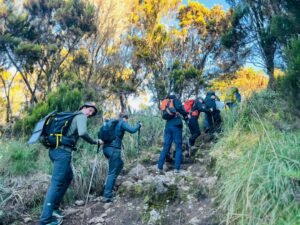
On the mountain, lead guides and assistant guides work together to manage pace, altitude acclimatization, campsite arrivals, rest breaks and summit-night preparations. They monitor climbers for warning signs of altitude-related illness and help decide whether further ascent is safe.
One of the most important reasons for having sufficient guide coverage is the possibility that a participant may need to descend early. If someone becomes ill, injured or unable to continue, an appropriately qualified guide may accompany that person down. The remaining climbers should continue only if there are enough qualified staff and safe conditions to support them.
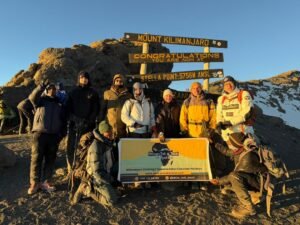
Summit night can require particular attention. Climbers may move at different speeds in freezing temperatures and thin air, and the guide team may need to supervise separate pacing groups or manage an early turnaround.
A reliable local Kilimanjaro tour operator should therefore explain its guide assignment policy, how guides are selected, which qualifications are required, what medical and emergency training is available and how the mountain team will be staffed for the actual group size.
African Trek & Travel helps travelers enquire about professionally guided Kilimanjaro group joining and private expeditions on popular routes such as eight-day Lemosho, seven-day Machame, Marangu, Northern Circuit and Rongai. Before booking, travelers can request information about departure dates, route plans, mountain guides, assistant guide arrangements, expedition safety and included services.
This comprehensive guide explains the duties of lead guides and assistant guides, how staffing can change with group size, how guides handle different fitness levels, what happens during summit night and why qualified supervision matters during early descent and mountain emergencies.
You will also find practical crew-assignment examples, guide qualification questions, important distinctions between guides and porters, eight complete Kilimanjaro climbing itineraries, indicative 2027 group prices, 50 frequently asked questions and a WhatsApp enquiry form for requesting guide and departure information.
Before making a climbing deposit, ask exactly how many qualified guides will accompany your expedition and how the team will maintain safe supervision if one or more travelers need additional assistance.
Lead Guide
Overall mountain leadership
Assistant Guides
Additional qualified support
8 Routes
Day-by-day itineraries
50 FAQs
Guide and crew questions
How Does a Kilimanjaro Tour Operator Decide How Many Guides a Group Needs?
A professional operator should determine guide staffing before the expedition starts. The plan should reflect the number of booked climbers, applicable requirements and the ability to maintain safe qualified supervision throughout the trek.
The most important question is not simply how many staff members travel with the group. A large crew may include cooks, porters and other support personnel, but not all crew members have mountain guiding responsibilities.
Expedition Leadership
Lead Mountain Guide
Oversees trekking operations, coordinates mountain staff, manages route progress and makes safety-related decisions.
Additional Supervision
Assistant Mountain Guides
Provide additional qualified coverage for climbers, supervised subgroups, summit support and descent arrangements.
Group Logistics
Mountain Cook
Prepares meals and coordinates food-related arrangements for the expedition.
Equipment and Camp
Porter Team
Transports approved expedition supplies, helps with camp logistics and performs assigned support duties.
Is One Lead Guide Enough for Every Group?
No single staffing arrangement should be assumed appropriate for groups of all sizes. The operator must plan sufficient qualified guide coverage for the actual expedition.
Does Every Climber Have a Personal Guide?
Not necessarily. Group climbing normally involves shared mountain guides. A dedicated personal guide may be available through an agreed additional arrangement.
Are Assistant Guides Always Assigned?
Many organized expeditions use assistant guides, particularly for groups of multiple climbers. The exact plan should be confirmed.
Who Decides the Guide Assignments?
The tour operator ordinarily coordinates the mountain crew and appoints the lead guide. Specific operational responsibilities should be confirmed under applicable rules.
Can Guide Numbers Change Before Departure?
Yes. A change in final group size may require staffing adjustments. The operator should explain any material changes while maintaining required safety arrangements.
Key point:
Ask for the number of qualified mountain guides, not just the total number of mountain crew members. Porters and cooks should not automatically be included in the guide count.
What Does the Lead Kilimanjaro Mountain Guide Do?
The lead guide is responsible for coordinating the overall trekking expedition and directing the mountain team according to the operator's procedures and applicable regulations.
Mountain Route Leadership
The lead guide oversees the planned route, daily departures, campsite destinations and mountain movements.
Daily Briefings
The guide explains trekking conditions, expected walking demands, weather considerations and the following day's schedule.
Altitude Safety
The guide coordinates symptom monitoring and decisions about whether climbers can safely continue ascending.
Walking Pace Management
A steady trekking pace helps manage exertion and supports organized progress.
Mountain Crew Coordination
The lead guide works with assistant guides, cooks, porters and other personnel to coordinate daily operations.
Summit Night Decisions
The guide assesses whether conditions and individual health permit a summit attempt or require descent.
Emergency Response
When someone needs help, the lead guide coordinates appropriate qualified assistance and communicates with the operations team.
Final Expedition Reporting
At the end of the climb, the guide may help confirm the group's progress and complete necessary expedition procedures.
Important:
A competent lead guide must be prepared to recommend or direct descent when continuing is unsafe. A tour operator cannot legitimately promise that every participant will reach Uhuru Peak.
What Is the Role of an Assistant Guide on Mount Kilimanjaro?
Assistant mountain guides support the lead guide and help maintain appropriate qualified supervision across the expedition.
Monitoring Climbers
Observe walking ability, fatigue, altitude symptoms and other potential concerns.
Supporting Slower Hikers
May accompany slower climbers within an approved and safely supervised plan.
Managing Separate Paces
Help coordinate different walking speeds when appropriate staffing permits.
Assisting Summit Night
Provide additional qualified coverage during the demanding summit attempt.
Early Descent Support
May accompany a climber who needs to descend while the rest of the group remains suitably guided.
Emergency Communication
Help relay relevant information and coordinate support under expedition leadership.
Can an Assistant Guide Lead a Subgroup?
Yes, when appropriately qualified and when the arrangement complies with applicable safety and guiding requirements.
Can an Assistant Guide Make Safety Decisions?
Qualified assistant guides can recognize problems and act according to their professional responsibilities and the expedition's emergency protocols.
Can a Climber Request an Assistant Guide?
Yes. Ask the operator whether additional dedicated qualified guide support is possible and whether it changes the price.
Are Assistant Guides Less Important Than the Lead Guide?
No. They perform different responsibilities but can be vital during group separation, summit attempts and emergency descent.
Lead Guide vs Assistant Guide vs Porter: What Is the Difference?
| Responsibility | Lead Guide | Assistant Guide | Porter |
|---|---|---|---|
| Overall expedition leadership | Primary role | Supports leadership | Not normally responsible |
| Qualified trekking supervision | Yes | Yes, when appropriately qualified | Not automatically |
| Altitude symptom monitoring | Coordinates | Assists | May report concerns |
| Different walking speeds | Sets group plan | Supports subgroups | Not a substitute for guide coverage |
| Summit-night supervision | Leads or coordinates | Assists | May perform separate support duties |
| Assisted descent | Coordinates | May escort climbers | May assist under qualified direction |
| Transporting group equipment | Not primary duty | Not primary duty | Primary logistical role |
| Camp logistics | Oversees | May help coordinate | Supports setup and equipment |
| Professional guide credentials | Required as applicable | Required for guiding responsibilities | Not presumed to hold guide credentials |
Can a Porter Become a Mountain Guide?
Yes. Some experienced porters progress into qualified mountain guiding roles through training and relevant authorization.
Can a Porter Replace an Assistant Guide?
Only if the individual is appropriately qualified and authorized for guiding responsibilities. Porter status alone does not establish that qualification.
Does the Cook Count as a Guide?
No. The mountain cook has a different primary role.
How Many Guides and Assistant Guides Are Assigned According to Group Size?
The number of qualified guides should increase as necessary with the size and needs of the expedition. Actual requirements and operating practices should be verified with the tour operator and relevant park authorities.
The following table illustrates questions travelers should ask for different group sizes. It is not an official TANAPA guide-ratio table or a promise of staffing by African Trek & Travel.
| Number of Climbers | Lead Guide Arrangement | Assistant Guide Planning | What to Confirm |
|---|---|---|---|
| 1 Climber | Qualified expedition lead | Ask whether additional qualified coverage is provided | Solo safety, summit and descent support |
| 2 Climbers | Qualified expedition lead | Ask about a second qualified guide | What happens if one partner descends? |
| 3–4 Climbers | Qualified expedition lead | Confirm number of assistants | Different walking speeds and early descent |
| 5–6 Climbers | Qualified expedition lead | Confirm sufficient assistant guide coverage | Supervised subgroups and summit support |
| 7–8 Climbers | Qualified expedition lead | Request detailed guide roster | Coverage if one guide must descend |
| 9–10 Climbers | Qualified expedition lead | Request exact number of qualified assistants | Group separation and emergency capacity |
| 11+ Climbers | Leadership structure agreed by operator | Additional guide staffing as required | Applicable rules and full expedition supervision |
How Many Guides Are Needed for Two Climbers?
Ask whether the operator assigns a lead and assistant guide, especially if one traveler may need to descend separately.
How Many Guides Are Needed for Six Climbers?
Request the actual qualified guide roster and the company's plan for pace management and emergency descent.
How Many Guides Are Needed for Ten Climbers?
A larger expedition needs an appropriately scaled guide team. Confirm the planned ratio and applicable requirements in writing.
Is One Guide for Two Climbers Common?
Some operators describe approximately one qualified guide per two climbers as their operational standard. Actual staffing policies and regulatory obligations must be checked separately.
Booking advice:
Request a statement such as "Our expedition will have one lead mountain guide and X qualified assistant guides for Y confirmed climbers." The operator should fill in the real numbers for your departure.
How Kilimanjaro Guides Are Assigned Before a Group Departure
Confirm the Final Group Size
The operator checks the number of travelers joining the planned expedition.
Review the Selected Kilimanjaro Route
The operations team considers the route, number of trekking days and mountain logistics.
Identify Qualified Mountain Guides
Suitable personnel are selected based on availability, qualifications and relevant experience.
Appoint the Lead Guide
A qualified guide is assigned overall operational leadership.
Assign Assistant Guides
Additional qualified guides are allocated as appropriate for group size, requirements and emergency coverage.
Coordinate the Support Crew
The team arranges cooks, porters, camping equipment and supplies separately from guide allocation.
Review Safety and Rescue Procedures
Guides discuss communication, altitude monitoring, early descent and emergency response responsibilities.
Conduct the Pre-Climb Briefing
Climbers meet available expedition personnel, receive instructions and discuss mountain preparation.
Review Staffing Before Mountain Entry
The operator ensures the required qualified personnel and other crew arrangements are in place.
Monitor the Expedition Throughout the Climb
Lead and assistant guides coordinate the group's progress and reassess support needs when circumstances change.
How Do Kilimanjaro Guides Manage Climbers with Different Fitness Levels?
Kilimanjaro joining groups often include first-time high-altitude trekkers, experienced hikers, couples, solo travelers and people with different levels of endurance.
Guides generally encourage a controlled walking pace, often described by the Swahili expression "pole pole," meaning "slowly, slowly."
Slow and Steady Pacing
The lead guide coordinates a manageable pace, taking account of terrain, altitude and the group's condition.
Supporting Slower Climbers
An assistant guide may accompany a slower traveler when sufficient qualified staffing is available.
Managing Faster Climbers
Experienced hikers should not independently rush ahead. Any separate walking group requires an appropriate qualified guide arrangement.
Organizing Rest Breaks
Guides coordinate opportunities for water, food, clothing adjustments and assessment.
Monitoring Altitude Symptoms
A person walking slowly due to illness needs assessment, not simply encouragement to move faster.
Reviewing the Next Day's Plan
Daily briefings allow guides to discuss progress and identify necessary adjustments.
Important:
Good physical fitness does not guarantee protection against altitude sickness. Appropriate acclimatization, symptom monitoring and safe ascent decisions remain essential.
How Are Guides Assigned During Kilimanjaro Summit Night?
Summit night is often the most demanding part of a Kilimanjaro expedition. Climbers face darkness, steep terrain, freezing temperatures, fatigue and reduced oxygen availability at high elevation.
The guide team may need to provide closer supervision during this stage than during easier trekking days.
Summit Briefing
The lead guide explains expected departure time, clothing, route conditions, pacing and turnaround decisions.
Walking Pace Management
Guides maintain a controlled ascent and monitor how climbers respond to the increasing altitude.
Assistant Guide Coverage
Qualified assistant guides may support different walking speeds, supervise smaller groups or accompany travelers needing to turn back.
Managing a Summit Turnaround
If a climber cannot safely continue, an appropriate guide may accompany them down.
Remaining Group Supervision
Other climbers should continue only if qualified guide coverage and mountain conditions remain adequate.
Deciding When to Stop
Confusion, loss of coordination, severe breathing difficulties or other serious symptoms require urgent action. Reaching the summit should never override necessary medical or safety decisions.
| Summit Situation | Possible Guide Response |
|---|---|
| Group moving at a manageable pace | Maintain coordinated qualified supervision |
| One climber walking slowly | Assess the cause and adjust support if safe |
| One climber cannot continue | Arrange appropriate escorted descent |
| Different summit speeds | Use qualified supervised subgroups if possible |
| Severe altitude symptoms | Urgent descent and medical assistance as indicated |
| Unsafe weather | Change or end summit attempt as necessary |
What Happens If One Climber Needs to Descend with an Assistant Guide?
Early descent may be necessary because of altitude-related illness, injury, severe exhaustion or a personal decision to stop.
The lead guide assesses the situation and coordinates a safe plan. An appropriately qualified assistant guide may escort the descending participant, with other support personnel assigned as needed.
If enough qualified guides remain, the rest of the group may continue toward the planned camp or summit. However, continued ascent is never automatic.
Who Accompanies the Descending Climber?
A suitably qualified guide or an appropriate rescue team should provide the necessary support according to the person's condition.
Can the Lead Guide Continue with the Main Group?
Yes, if the descending climber has proper assistance and the remaining party can be safely supervised.
What If Several Climbers Need to Descend?
Multiple descents may require additional qualified personnel and changes to the expedition plan.
Can Porters Carry a Sick Climber?
Additional crew or rescue services may assist when appropriate, but serious medical needs require qualified assessment and suitable evacuation arrangements.
What Happens After the Climber Reaches Lower Altitude?
Depending on their condition, they may need medical evaluation, transport or recovery arrangements.
Mountain safety:
Emergency oxygen or a portable hyperbaric bag may provide temporary support in some circumstances but should not delay medically necessary descent or evacuation.
What Qualifications and Experience Should Kilimanjaro Guides Have?
A reliable operator should explain its guide selection requirements and demonstrate compliance with applicable park and professional standards.
Relevant Guide Credentials
Ask about current authorization, park identification and any applicable guiding qualification requirements.
Kilimanjaro Route Experience
Guides should understand the terrain, camps, route progression and relevant mountain procedures.
First-Aid Knowledge
Ask about relevant and current first-aid training and the guide team's emergency responsibilities.
Altitude Illness Awareness
Guides should recognize serious warning signs and know when continued ascent is unsafe.
Communication Skills
The team should explain route information and safety instructions in a language climbers can understand.
Emergency Coordination
Ask how guides communicate with the operating company, mountain rescue services and medical providers.
Should I Ask for the Lead Guide's Name Before Booking?
Yes. The operator may be able to provide the planned guide's name and experience, although staffing can change for legitimate reasons.
Can I Request an Experienced Lead Guide?
Yes. Discuss your experience and preferences with the company before confirming the expedition.
Should Assistant Guides Also Be Qualified?
Anyone performing regulated guiding responsibilities should meet the applicable requirements.
Can an Operator Promise a Specific Guide?
Some may offer this, subject to availability and contract terms. Request written confirmation if it is essential to your booking.
For official mountain information, consult Tanzania National Parks.
Guide Assignment for Solo Travelers, Couples and Private Kilimanjaro Groups
| Climbing Arrangement | Guide Planning Consideration | Question to Ask |
|---|---|---|
| Solo joining group | Shared guide team | How many guides support the final group? |
| Two-person couple in joining group | Shared group guide coverage | Can one guide assist if a partner descends? |
| Private solo climb | Dedicated expedition guiding arrangement | Is additional qualified summit support provided? |
| Private couple climb | Guides assigned exclusively to the party | What happens if one partner turns back? |
| Small group of friends | Guide plan based on final numbers | How many assistant guides are included? |
| Larger group climb | Additional qualified coverage as needed | How are separate walking speeds managed? |
Do Solo Travelers Share Guides with the Group?
Usually, yes. A joining group generally has a shared professional mountain guide team.
Can Couples Request Their Own Guide While Joining a Group?
They can ask whether additional dedicated guide support is possible. It may involve a supplement.
Are Private Climb Guides Different from Group Guides?
Both arrangements require appropriately qualified staff. Private expeditions are organized for the booking party rather than unrelated joining participants.
Is a Private Expedition Safer?
Safety depends on actual staffing, guide competence, route choice and emergency procedures. Private status alone is not a guarantee.
Does the Number of Guides Affect the Price of a Kilimanjaro Group Climb?
Guide salaries and overall mountain crew costs contribute to a Kilimanjaro climbing package's price. A company providing additional staff may have different operating costs, but the final quote depends on many other factors as well.
Guide and Assistant Guide Wages
Qualified mountain staff must be compensated according to applicable rules and the operator's employment arrangements.
Route Duration
Longer expeditions require more staff days, meals and mountain logistics.
Group Size
More climbers may require additional qualified guides and other crew support.
Private Guide Support
A separate dedicated guide request may result in an additional charge.
Guide and Crew Tips
Tips are commonly quoted separately from the package price. Ask for the operator's current tipping guideline.
| Route | Days | Indicative Group Price Per Person | Guide Staffing |
|---|---|---|---|
| 8 Days Lemosho | 8 | From US$1,800 | Confirm actual roster |
| 7 Days Lemosho | 7 | From US$1,750 | Confirm actual roster |
| 7 Days Machame | 7 | From US$1,680 | Confirm actual roster |
| 6 Days Machame | 6 | From US$1,550 | Confirm actual roster |
| 6 Days Marangu | 6 | From US$1,500 | Confirm actual roster |
| 5 Days Marangu | 5 | On request | Confirm actual roster |
| 9 Days Northern Circuit | 9 | From US$2,600 | Confirm actual roster |
| 7 Days Rongai | 7 | On request | Confirm actual roster |
Pricing note:
These are indicative planning figures, not verified current 2027 quotations. The number of qualified guides, actual group size, route inclusions and final price must be provided by the operator.
Do Guide Assignments Differ Between Lemosho, Machame, Marangu and Northern Circuit?
The general duties of lead and assistant guides are similar across Kilimanjaro routes, but terrain, group size, remoteness, itinerary duration and summit arrangements can affect the staffing plan.
| Route | Duration | Accommodation | Guide Planning Focus |
|---|---|---|---|
| 8 Days Lemosho | 8 Days | Camping | Long western approach, Barranco Wall and summit support |
| 7 Days Lemosho | 7 Days | Camping | Longer combined day via Karanga |
| 7 Days Machame | 7 Days | Camping | Barranco Wall, altitude monitoring and summit night |
| 6 Days Machame | 6 Days | Camping | More compressed trekking schedule |
| 6 Days Marangu | 6 Days | Huts | Hut route coordination and Kibo summit attempt |
| 5 Days Marangu | 5 Days | Huts | Limited acclimatization time |
| 9 Days Northern Circuit | 9 Days | Camping | Remote northern sections and communication |
| 7 Days Rongai | 7 Days | Camping and huts | Northern ascent and eastern descent |
Does Eight-Day Lemosho Need More Guide Days?
Yes. Its longer itinerary means guides are assigned for more mountain days than a shorter climb.
Does Barranco Wall Require Guide Assistance?
Guides coordinate the group's safe movement on this scrambling section and assess individual support needs.
Is Northern Circuit Different Because It Is Remote?
Its remote sections can require careful communication, route planning and early descent arrangements.
Do Marangu Groups Have Assistant Guides?
They may. The actual guide roster depends on the operator and group arrangements.
8 Complete Kilimanjaro Climbing Itineraries with Guide Assignment Information for 2027
The itineraries below are examples of common Kilimanjaro climbing programs. Each route requires professional mountain guiding, but the exact staffing must be confirmed for the individual departure.
Scenic Western Kilimanjaro Route
8 Days Lemosho Route Group Climb 2027
Experience the western rainforest, Shira Plateau, Lava Tower, Barranco Wall and Karanga Camp.
Lemosho Gate → Mti Mkubwa → Shira 1 → Shira 2 → Barranco → Karanga → Barafu → Uhuru Peak → Mweka Gate
Detailed 8 Day Itinerary
- Day 1: Lemosho Gate to Mti Mkubwa Camp Transfer from Moshi to the western entrance, complete registration and begin hiking through beautiful mountain rainforest. The lead guide introduces the expedition's walking procedures and mountain crew. Overnight: Mti Mkubwa Camp
- Day 2: Mti Mkubwa to Shira 1 Camp Ascend through changing vegetation zones toward the Shira Plateau. The guide team maintains a suitable pace and observes each climber's progress. Overnight: Shira 1 Camp
- Day 3: Shira 1 to Shira 2 Camp Cross the scenic plateau and enjoy views of Kilimanjaro's upper slopes. A suitable acclimatization walk may be arranged according to conditions. Overnight: Shira 2 Camp
- Day 4: Shira 2 to Barranco via Lava Tower Ascend toward Lava Tower for altitude exposure before descending into Barranco Valley. The team monitors symptoms and walking ability. Overnight: Barranco Camp
- Day 5: Barranco to Karanga Camp Cross the famous Barranco Wall under guide supervision and continue through alpine valleys to Karanga. Overnight: Karanga Camp
- Day 6: Karanga to Barafu Camp Hike toward the summit staging camp and prepare for the demanding summit attempt. Guides discuss summit pacing and turnaround decisions. Overnight: Barafu Camp
- Day 7: Barafu to Uhuru Peak and Mweka Camp Attempt the summit when medically suitable and weather conditions permit. Lead and assistant guides coordinate the ascent and any necessary early descents. Overnight: Mweka Camp
- Day 8: Mweka Camp to Mweka Gate Complete the final rainforest descent, finish park exit procedures and return to Moshi.
Guide Assignment Questions
- Who will be the lead guide?
- How many qualified assistant guides are assigned?
- How are different walking speeds managed?
- What is the summit-night supervision plan?
- Who escorts someone needing early descent?
Route detail:
This eight-day itinerary includes Shira 2 and Karanga Camp, without a separate Moir Hut night.
Ask About 8 Days Lemosho Guides
Seven-Day Western Approach
7 Days Lemosho Route Kilimanjaro Group Climb 2027
A scenic western route with a shorter schedule than the eight-day option.
Lemosho Gate → Mti Mkubwa → Shira 1 → Shira 2 → Barranco → Barafu → Uhuru Peak → Mweka Gate
Detailed 7 Day Itinerary
- Day 1: Lemosho Gate to Mti MkubwaBegin hiking through rainforest after park registration.Overnight: Mti Mkubwa Camp
- Day 2: Mti Mkubwa to Shira 1Ascend through heath and moorland toward the high plateau.Overnight: Shira 1 Camp
- Day 3: Shira 1 to Shira 2Enjoy scenic walking across the Shira Plateau.Overnight: Shira 2 Camp
- Day 4: Shira 2 to BarrancoAscend via Lava Tower and descend toward Barranco Valley.Overnight: Barranco Camp
- Day 5: Barranco to Barafu via KarangaCross Barranco Wall and continue through Karanga toward Barafu on a longer trekking day.Overnight: Barafu Camp
- Day 6: Barafu to Uhuru Peak and MwekaAttempt the summit and descend when safe.Overnight: Mweka Camp
- Day 7: Mweka to Mweka GateComplete the trek and return to Moshi.
Ask how qualified guides support climbers during the longer day from Barranco to Barafu and during summit night.
Ask About 7 Days Lemosho
Popular Kilimanjaro Camping Route
7 Days Machame Route Kilimanjaro Group Climb 2027
A scenic camping itinerary featuring Shira, Barranco Wall and Karanga.
Machame Gate → Machame Camp → Shira → Barranco → Karanga → Barafu → Uhuru Peak → Mweka Gate
Detailed 7 Day Itinerary
- Day 1: Machame Gate to Machame CampBegin the climb through montane rainforest.Overnight: Machame Camp
- Day 2: Machame to Shira CampAscend through heath and moorland to Shira.Overnight: Shira Camp
- Day 3: Shira to Barranco via Lava TowerGain altitude near Lava Tower and descend into Barranco Valley.Overnight: Barranco Camp
- Day 4: Barranco to Karanga CampCross Barranco Wall under guide supervision.Overnight: Karanga Camp
- Day 5: Karanga to Barafu CampAscend to the summit staging camp and rest.Overnight: Barafu Camp
- Day 6: Barafu to Uhuru Peak and MwekaAttempt the summit if conditions permit and descend.Overnight: Mweka Camp
- Day 7: Mweka to Mweka GateComplete the descent and return to Moshi.
Check the actual guide staffing for Barranco Wall, different walking speeds and the summit attempt.
Ask About 7 Days Machame
Shorter Machame Trek
6 Days Machame Route Kilimanjaro Group Climb 2027
A shorter Machame itinerary with demanding trekking days.
Machame Gate → Machame Camp → Shira → Barranco → Barafu → Uhuru Peak → Mweka Gate
Detailed 6 Day Itinerary
- Day 1: Machame Gate to Machame CampStart hiking through rainforest.Overnight: Machame Camp
- Day 2: Machame to ShiraContinue upward into moorland.Overnight: Shira Camp
- Day 3: Shira to BarrancoAscend near Lava Tower, then descend to Barranco.Overnight: Barranco Camp
- Day 4: Barranco to Barafu via KarangaCross Barranco Wall and continue to Barafu.Overnight: Barafu Camp
- Day 5: Barafu to Uhuru Peak and MwekaAttempt the summit and descend.Overnight: Mweka Camp
- Day 6: Mweka to Mweka GateComplete the descent and return to Moshi.
The six-day program has less acclimatization time than the seven-day version. Qualified guide coverage does not remove the risks of rapid ascent.
Ask About 6 Days Machame
Hut-Based Kilimanjaro Route
6 Days Marangu Route Kilimanjaro Group Climb 2027
A mountain hut itinerary with a Horombo acclimatization day.
Marangu Gate → Mandara → Horombo → Kibo → Uhuru Peak → Horombo → Marangu Gate
Detailed 6 Day Itinerary
- Day 1: Marangu Gate to Mandara HutHike through mountain rainforest.Overnight: Mandara Hut
- Day 2: Mandara to Horombo HutContinue into moorland.Overnight: Horombo Hut
- Day 3: Horombo Acclimatization DayEnjoy an appropriate acclimatization hike and return to Horombo.Overnight: Horombo Hut
- Day 4: Horombo to Kibo HutCross alpine terrain to Kibo.Overnight: Kibo Hut
- Day 5: Kibo to Uhuru Peak and HoromboAttempt the summit and descend to Horombo.Overnight: Horombo Hut
- Day 6: Horombo to Marangu GateComplete the descent to the park gate.
Confirm guide arrangements for the long summit day from Kibo and the return descent to Horombo.
Ask About 6 Days Marangu
Short Hut-Based Trek
5 Days Marangu Route Kilimanjaro Group Climb 2027
A shorter hut-based itinerary with limited altitude acclimatization time.
Marangu Gate → Mandara → Horombo → Kibo → Uhuru Peak → Horombo → Marangu Gate
Detailed 5 Day Itinerary
- Day 1: Marangu Gate to Mandara HutBegin trekking through rainforest.Overnight: Mandara Hut
- Day 2: Mandara to Horombo HutAscend into open moorland.Overnight: Horombo Hut
- Day 3: Horombo to Kibo HutContinue through alpine terrain to the summit staging hut.Overnight: Kibo Hut
- Day 4: Kibo to Uhuru Peak and HoromboAttempt the summit and descend.Overnight: Horombo Hut
- Day 5: Horombo to Marangu GateFinish the descent.
The five-day schedule offers limited altitude adaptation. Many climbers may benefit from a longer option.
Ask About 5 Days Marangu
Extended Northern Mountain Traverse
9 Days Northern Circuit Kilimanjaro Group Climb 2027
Explore Kilimanjaro's western approach and remote northern slopes.
Lemosho Gate → Mti Mkubwa → Shira 1 → Shira 2 → Moir Hut → Buffalo → Third Cave → School Hut → Uhuru Peak → Mweka Gate
Detailed 9 Day Itinerary
- Day 1: Lemosho Gate to Mti MkubwaBegin through western rainforest.Overnight: Mti Mkubwa Camp
- Day 2: Mti Mkubwa to Shira 1Ascend to the high plateau.Overnight: Shira 1 Camp
- Day 3: Shira 1 to Shira 2Cross scenic plateau landscapes.Overnight: Shira 2 Camp
- Day 4: Shira 2 to Moir HutContinue toward the northern approach.Overnight: Moir Hut
- Day 5: Moir Hut to Buffalo CampTraverse remote northern slopes.Overnight: Buffalo Camp
- Day 6: Buffalo to Third CaveContinue through high-altitude northern terrain.Overnight: Third Cave
- Day 7: Third Cave to School HutAscend toward summit staging camp.Overnight: School Hut
- Day 8: School Hut to Uhuru Peak and MwekaAttempt the summit and descend to Mweka.Overnight: Mweka Camp
- Day 9: Mweka to Mweka GateComplete the final descent and return to Moshi.
Remote sections make communication and early-descent coordination particularly important. Request the exact guide plan for the actual route.
Ask About Northern Circuit Guides
Northern Kilimanjaro Approach
7 Days Rongai Route Kilimanjaro Group Climb 2027
Enjoy a northern ascent and descend along the Marangu side.
Rongai Gate → Simba → Second Cave → Kikelewa → Mawenzi Tarn → Kibo → Uhuru Peak → Horombo → Marangu Gate
Detailed 7 Day Itinerary
- Day 1: Rongai Gate to Simba CampBegin hiking through northern woodland and moorland.Overnight: Simba Camp
- Day 2: Simba to Second CaveContinue gradually uphill.Overnight: Second Cave
- Day 3: Second Cave to KikelewaWalk through scenic northern mountain terrain.Overnight: Kikelewa Camp
- Day 4: Kikelewa to Mawenzi TarnAscend toward the dramatic Mawenzi slopes.Overnight: Mawenzi Tarn Camp
- Day 5: Mawenzi Tarn to Kibo HutCross the alpine saddle and rest before summit night.Overnight: Kibo Hut
- Day 6: Kibo to Uhuru Peak and HoromboAttempt the summit and descend to Horombo.Overnight: Horombo Hut
- Day 7: Horombo to Marangu GateComplete the trek and return to Moshi.
Ask how guides cover the northern approach, summit ascent and the Marangu-side descent.
Ask About Rongai Guides
Are Lead Guides and Assistant Guides Included in Kilimanjaro Group Prices?
Professional mountain guiding is a fundamental part of organized Kilimanjaro climbs. However, travelers should still confirm exactly which guide services and mountain crew arrangements are included in their quotation.
Common Inclusions to Verify
- Qualified lead mountain guide
- Qualified assistant guides as applicable
- Porter and cooking crew
- Mountain meals
- Park entry and camping or hut fees
- Mountain transportation
- Camping equipment where applicable
- Pre-climb briefing
- Daily health monitoring procedures
- Emergency coordination arrangements
- Pre-climb hotel if included
- Post-climb hotel if included
- Airport transfers if included
Common Exclusions to Verify
- International flights
- Tanzania visa fees
- Travel medical insurance
- Specialized evacuation insurance
- Guide and porter gratuities
- Personal climbing equipment
- Sleeping bag rental
- Hotel upgrades
- Extra mountain services
- Dedicated personal guide supplements
- Optional safaris
- Zanzibar extensions
- Personal medical expenses
Are Guide Wages Included?
They are generally part of the operator's expedition costs. Ask whether the quoted rate covers all agreed guiding services.
Are Guide Tips Included?
Tips are often excluded. Request current written tipping guidance.
Can I Pay Extra for a Personal Assistant Guide?
Ask the operator whether it can arrange a dedicated qualified guide and what the additional charge would be.
10 Important Questions to Ask About Kilimanjaro Guide Assignments Before Booking
How Many Climbers Are Already Booked?
Request the current participant count for your exact departure.
Who Will Be the Lead Mountain Guide?
Ask for the guide's relevant experience and credentials.
How Many Assistant Guides Will Be Assigned?
Request the actual qualified guide roster for the expected group size.
What Is Your Guide-to-Climber Ratio?
Ask how the operator calculates guide staffing and complies with applicable requirements.
What Happens If Someone Walks Much More Slowly?
Confirm supervised pacing and subgroup arrangements.
How Is Summit-Night Guide Support Organized?
Ask about supervision, turnaround decisions and different walking speeds.
Who Accompanies a Climber Who Must Descend?
Request details of the escorted descent procedure.
What Emergency Training Do Guides Have?
Check relevant current first-aid and altitude illness training.
What Happens if the Group Size Changes?
Ask whether guide numbers will be reviewed when new climbers join or cancel.
Will Guide Arrangements Be Confirmed in Writing?
Request a final booking or expedition briefing document identifying the agreed guiding services.
Guide Staffing and Kilimanjaro Group Departures Throughout 2027
Kilimanjaro can be climbed year-round. January to March and June to October are commonly preferred periods, although weather remains unpredictable.
Guide staffing should reflect the actual group and mountain conditions rather than a departure's popularity alone.
| Month | Typical Seasonal Conditions | Guide Staffing Question |
|---|---|---|
| January | Often relatively dry | How many guides support our confirmed group? |
| February | Popular trekking season | What is the assistant guide arrangement? |
| March | Potentially increasing rain | How will weather changes be handled? |
| April | Frequently wetter | What is the wet-weather safety plan? |
| May | Rain may continue | How are guides equipped and trained? |
| June | Drier season developing | What is the actual group size? |
| July | Popular climbing month | Are guide numbers sufficient for a larger group? |
| August | High-demand climbing period | Will assistant guides be assigned for different speeds? |
| September | Often favorable trekking conditions | How is summit-night support organized? |
| October | Variable late-season weather | What are the turnaround procedures? |
| November | Short-rains period | How does the team manage wet trails? |
| December | Holiday season and variable weather | What is the guide plan for Christmas and New Year groups? |
50 Frequently Asked Questions About Kilimanjaro Guides and Assistant Guide Assignments
1. How are guides assigned to a Kilimanjaro climbing group?
The operator assigns a qualified lead guide and appropriate additional guide support according to the expedition's size, applicable rules and operational needs.
2. What is the role of the lead guide?
The lead guide coordinates the expedition, route progress, mountain safety, crew and important decisions.
3. What does an assistant guide do?
Assistant guides help supervise climbers, manage pace, monitor symptoms and support summit or descent arrangements.
4. How many guides are needed per climber?
Actual staffing depends on applicable rules and the operator's policy. Request the exact qualified guide roster.
5. Is one guide for two climbers common?
Some operators use an approximate one-to-two qualified guide ratio as their policy. Verify the actual arrangement and regulatory requirements.
6. Does every climber get a private guide?
No. Joining groups normally share qualified guide services.
7. Do solo travelers have a lead guide?
Solo climbers require appropriate qualified guiding arrangements, whether on a group or private expedition.
8. Do couples share the group guides?
Usually, yes, when participating in a joining group.
9. Can couples request a separate assistant guide?
They can ask about additional dedicated support, subject to availability and pricing.
10. How many guides accompany four climbers?
Ask the operator for its actual staffing plan rather than assuming one universal number.
11. How many guides accompany six climbers?
The operator should explain its planned lead and assistant guide coverage for six participants.
12. How many guides accompany ten climbers?
A larger group needs suitably scaled qualified supervision. Verify the exact guide count.
13. Can assistant guides lead smaller groups?
Yes, when qualified and operating under an appropriate supervised plan.
14. Can faster climbers walk with a separate guide?
Possibly, where sufficient qualified guides and safe conditions permit.
15. Can slower climbers receive assistant guide support?
Yes, when the expedition's staffing allows a suitable supervised arrangement.
16. What does pole pole mean?
It means "slowly, slowly" in Swahili and is commonly used to encourage controlled mountain trekking.
17. Do guides decide the walking pace?
Yes. Guides coordinate trekking pace based on group needs and mountain conditions.
18. Do guides check climbers' health?
Responsible guide teams monitor symptoms and well-being throughout the climb.
19. Can guides recognize altitude sickness?
Qualified mountain guides should understand relevant altitude illness warning signs and appropriate responses.
20. Do all guides carry medical qualifications?
Qualifications vary. Request relevant and current training details from the operator.
21. What happens if one climber gets sick?
The guide assesses the situation and organizes appropriate support or descent.
22. Can an assistant guide descend with one climber?
Yes, if appropriately qualified and supported by a safe descent plan.
23. Can other climbers continue if one descends?
Potentially, if enough qualified guide coverage and safe conditions remain.
24. Does the entire group need to turn back?
Not automatically. The guide team assesses the circumstances.
25. What if two climbers need to descend?
Guide staffing and emergency arrangements must be reassessed.
26. Can porters replace assistant guides?
Not unless appropriately qualified and authorized for the required guiding duties.
27. Does the cook count as a mountain guide?
No. The cook has a different primary role.
28. Are assistant guides qualified mountain staff?
Anyone performing regulated guiding duties should meet the applicable professional requirements.
29. Can I request the guide's name before booking?
Yes. Ask the operator about the planned lead guide and their experience.
30. Can I request a particular guide?
Possibly, subject to the operator's arrangements and the guide's availability.
31. Are guides assigned before the expedition starts?
Operators generally plan mountain staffing in advance and may update it according to final group numbers.
32. Can guide numbers change if more climbers join?
Yes. The operator should review staffing to maintain appropriate qualified supervision.
33. Can guide numbers change after cancellations?
They may, subject to maintaining required staffing and accepted booking terms.
34. Who leads the group on summit night?
The lead guide coordinates the summit attempt, with suitably qualified assistant guides supporting the expedition as arranged.
35. Are extra guides important on summit night?
Additional qualified coverage may help manage different walking speeds and early descents.
36. Can a climber turn back from Stella Point?
Yes. A safe turnaround should be arranged when needed.
37. Do guides guarantee summit success?
No. Altitude response, weather and individual health make summit outcomes uncertain.
38. Is the lead guide responsible for emergency decisions?
The lead guide coordinates expedition safety decisions and emergency response according to applicable procedures.
39. Is oxygen carried by every Kilimanjaro group?
Do not assume so. Ask what equipment your actual expedition carries.
40. Do guides carry a portable hyperbaric bag?
Some expeditions do. Confirm equipment availability and qualified operation for the actual group.
41. Can guides organize mountain stretcher rescue?
They can coordinate appropriate rescue services subject to location, equipment and availability.
42. Is helicopter rescue guaranteed?
No. Helicopter services depend on weather, access and operational availability.
43. Are mountain guide wages included in climbing prices?
They are generally part of the operator's agreed expedition costs, but the package should be checked.
44. Are guide tips included?
Tips are commonly quoted separately. Request a current guideline.
45. Does a larger group need more guides?
Usually additional qualified supervision is needed as group size increases, according to applicable requirements and operating needs.
46. Do Northern Circuit expeditions need special guide planning?
Remote northern sections require careful route, communication and emergency coordination.
47. Is guiding different on Marangu Route?
The guide's core safety responsibilities remain similar, although the route and hut logistics differ.
48. Can I request a private guide on a joining group?
Ask whether dedicated additional guide support can be arranged and at what cost.
49. What should I confirm before paying a deposit?
Verify group status, exact guide staffing, itinerary, safety arrangements, price and booking conditions.
50. How do I ask African Trek & Travel about guide assignment in 2027?
Provide your preferred route, date and number of climbers. Request a written explanation of lead and assistant guides, group size and mountain support.
Ask How Many Guides Will Accompany Your Kilimanjaro Group in 2027
Before booking a Kilimanjaro group climb, request the planned mountain guide roster, group size and safety arrangements.
Use this enquiry form to ask African Trek & Travel about lead guides, assistant guides, summit-night coverage, early descent support and available group departures.
Choose a Kilimanjaro Group with the Right Guide Support
A well-organized Kilimanjaro climbing expedition depends on appropriate professional mountain leadership, qualified assistant guide coverage and clear emergency procedures.
Lead guides coordinate overall operations and safety, while assistant guides provide additional supervision, help manage different walking speeds and support climbers during summit attempts or early descents.
Before booking, ask the operator how many guides will accompany your particular group, which qualifications they hold and how safe supervision will be maintained throughout the journey.
Contact African Trek & Travel to enquire about professionally guided Kilimanjaro group and private climbing arrangements for 2027.
This guide explains common responsibilities and staffing considerations for Kilimanjaro mountain expeditions. It does not establish an official universal guide-to-climber ratio, verify a specific operator's compliance, or promise any particular guide or staffing arrangement for African Trek & Travel. Relevant current Tanzania National Parks requirements, professional qualifications, the actual group size and the accepted booking agreement must be checked. Sample itineraries and indicative prices are not confirmed live 2027 departures. Guide staffing cannot guarantee summit success or eliminate altitude risks. Severe illness requires appropriate assessment, descent and emergency care.